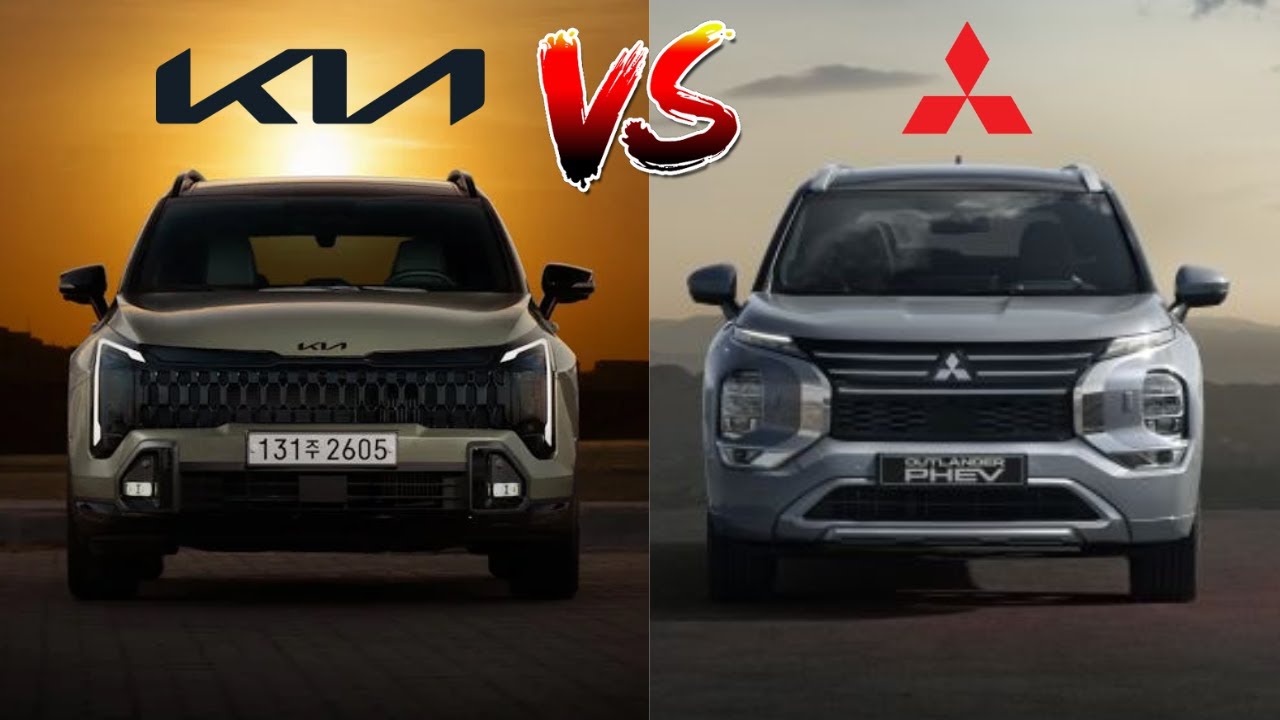
2026 Kia Sportage PHEV vs Mitsubishi Outlander PHEV | Best Plug-in Hybrid SUV?
Plug-in hybrids are hotter than ever, and for good reason. You get the benefits of all electric driving for your daily commutes with the freedom of a gas engine when the road takes you further. And in this video, we’re putting two of the most talked about PHEV head-to-head. The 2026 Kia Sportage PHEV and the 2026 Mitsubishi Outlander PHEV. On one side, Kia’s sleek, techsavvy compact SUV with impressive electric range and that signature bold styling. On the other, Mitsubishi’s bestselling plug-in globally, the Outlander PV. Now refined, more capable, and still the only one in the segment offering three rows of seats. But which one actually delivers the better balance of efficiency, comfort, and everyday usability? Let’s plug in, power up, and find out. This is the battle of smart hybrids, and the winner just might surprise you. This is PAR, and you are watching Motor Nation. Before we dive into numbers and features, let’s set the stage with a quick overview of what these two plug-in hybrids bring to the table and what kind of drivers they’re really built for. The 2026 Kia Sportage PHE EV is all about that modern urban vibe. It’s a stylish, well packaged, compact SUV with all electric range for the daily grind, plus plenty of interior tech and comfort. It doesn’t try too hard to be flashy, but it still feels smart, efficient, and kind of fun to be in. This one’s perfect for folks who want to go electric most of the time without completely giving up gas. Then there’s the 2026 Mitsubishi Outlander PGV. And this one takes a different approach. It’s bigger, roomier, and aimed squarely at families or adventure ready drivers who still want plug-in efficiency, but with more versatility. It’s also the only peach in its class with three rows, giving it a big advantage if you’ve got kids, gear, or just a lot of life to haul around. Plus, Mitsubishi’s super all-wheel control system adds that extra confidence when the weather or the road gets unpredictable. Let’s dive under the hood. Because while both of these plug-in hybrids promise cleaner, smarter driving, the way they deliver power and the feel behind the wheel is quite different. Starting with the 2026 Kia Sportage PV, it’s built on a familiar yet refined setup. It combines a 1.6 L turbocharged inline 4 engine with a 66.9 kW electric motor. All powered by a 13.8 kWh lithium ion polymer battery. Together, you get a total output of 261 horsepower and 258 lbft of torque. And here’s what makes it enjoyable. The system runs through a six-speed automatic transmission, not CVT. That means you get real gear shifts, smoother, more connected driving that avoids that rubber band feeling some hybrids suffer from. Off the line, the Sportage PGEV is surprisingly brisk. It gets from 0 to 60 mph in about 6.9 seconds, which is quite good for a plug-in crossover. The electric motor fills in the gaps for low-end torque, making city driving feel effortless, while the turbo engine handles highway speeds without breaking sweat. Around corners, it feels nimble thanks to a lower center of gravity created by the battery placement, and the ride is refined without being too soft. Now, let’s talk electric range and efficiency. The Sportage can go up to 34 m on electric power alone, which covers most daily commutes. And with a level two charger, it’ll top up in about 2 hours. Once the battery is depleted, the system switches seamlessly into hybrid mode, where you can expect around 35 to 38 MPG combined, depending on road conditions and driving habits. It’s efficient, no question, and best of all, it doesn’t feel like a compromise. Now, shift gears to the 2026 Mitsubishi Outlander PGV, and the focus clearly shifts from sporty to versatile. This one’s running a more complex dual motor setup. You get a 2.4 L naturally aspirated engine paired with two electric motors, one at the front and one at the rear. For true electric all-wheel drive, it’s backed by a larger 20 kWh battery, which is almost 50% bigger than the Kia. Together, the system puts out 248 horsepower and 332 lbfd of torque, which sounds great on paper, but here’s the catch. It’s a heavier SUV, and the power delivery is more relaxed. The 0 to 60 mph sprint takes about 7.7 seconds, which isn’t slow, but the Outlander clearly prioritizes smoothness and stability over snappy acceleration. That said, where it really shines is in low traction driving, snow, rain, loose gravel. Thanks to Mitsubishi’s super all-wheel control system, it constantly manages torque front to rear and side to side, making it feel secure and confident where some other hybrids might struggle. And here’s the big surprise. Despite being larger and heavier, the Outlander PHEV still delivers an impressive 38 mi of electric only range. a bit more than the Kia. That’s enough to cover most daily errands without using a drop of fuel. Once the battery is done, realworld MPG hovers around 26 to 28 MPG, which is reasonable for a three row SUV with AWD. Charging takes about 6.5 hours on a level two charger, but Mitsubishi is one of the very few PHEV that still includes DC fast charging, meaning you can top up to 80% in just 38 minutes. A big plus on longer road trips or if you don’t have time to wait overnight. Let’s step inside because once the doors close, this is where the real ownership experience begins. In the 2026 Kia Sportage PHEV and 2026 Mitsubishi Outlander PHEV deliver two very different takes on what a plug-in SUV should feel like inside. Starting with the Sportage PHV, the vibe is instantly modern and refined. From the driver’s seat, you’re greeted by one of the cleanest, most digital forward cabins in the segment. The twin 12.3in curved displays blend together seamlessly, giving you a full digital cockpit that’s bright, responsive, and easy to read. One screen handles the gauge cluster with power flow, EV range, and driver assist visuals, while the other gives you infotainment, navigation, and vehicle settings. The interface is snappy and supports wireless Apple CarPlay and Android Auto. Still, the menus are intuitive, and you get extras like voice commands, built-in navigation, ambient lighting themes, a Harmon/card and sound system, and a multi-device Bluetooth connection. Handy if you’re sharing driving duties. Comfort-wise, the front seats strike a nice balance between supportive and soft, and the available memory function, ventilation, and heating are major pluses in variable climates. There’s also a power adjustable driver’s seat with lumbar support and materials, especially in EX Premium and SX Prestige trims. Include soft touch dash panels, contrast stitching, and leatherrett or full leather upholstery that really elevates the space. In back, second row passengers get reclining seatbacks. Rear AC vents and USBC ports built into the seatbacks, which is such a smart touch. Even with a battery under the floor, foot and knee room are excellent. And thanks to a nearly flat rear floor, it’s comfortable even with three adults across. Now, when it comes to cargo, the Sportage PHEV does sacrifice a little space compared to its gas sibling, mainly because of the battery packaging. You still get a respectable 34.5 cubic feet behind the rear seats and just over 65 cubic feet with them folded. The hands-free smart lift gate is available, too. And the low loading height makes it easy to slide in heavy items like strollers or luggage. Now, let’s open the door on the 2026 Mitsubishi Outlander PV. And the vibe shifts, not in a bad way, just in a more traditional and utilitarian direction. The layout is upright and purposeful, but with much better fit and finish than older Mitsubishi models. There’s a real attempt to blend rugged durability with premium touches here. And for the most part, it works. The dashboard is dominated by a 12.3 in touchscreen in higher trims with a clear and customizable digital driver display that lets you toggle between navigation, hybrid system data, and safety visuals. Physical buttons still exist, thankfully for climate, volume, and drive modes, so you’re not stuck swiping through screens just to defog your windshield or change the fan speed. Comfort is a highlight, especially up front. The Outlander PGEV offers wide soft seats with memory settings, ventilation, and available massage function. Yes, massage in top trims like the seal Touring. That’s a rare luxury in this class. There’s also a generous use of soft touch materials, contrast trim, and even quilted leather options on higher trims that really add a touch of class. In the second row, space is generous, especially for legroom, and Mitsubishi even thought to include sun shades, trizone climate control, and multiple USB ports. The seats slide and recline, making long family drives a bit easier on everyone. Cargo wise, with all seats up, the space is limited, about 11.7 cubic feet. But fold the third row flat and you get 33.5 cubic feet. Nearly identical to the Sportage. Drop both rows and you’re looking at just over 64.7 cubic feet. It’s wide, tall, and easy to load thanks to a low lift over height and optional power tailgate. Tech-wise, the Outlander doesn’t have as much visual flash as the Sportage, but nails the day-to-day essentials. solid navigation, fast wireless smartphone integration, and even built-in EV charging schedules and energy usage history. There’s also remote climate control via the My Mitsubishi app. Helpful when preconditioning your cabin while plugged in. Safety is one of those areas where modern plug-in hybrids are no longer just eco. They’re seriously smart, too. And both the 2026 Kia Sportage PHEV and the Mitsubishi Outlander PHEV pack a ton of driver assistance tech that goes well beyond the basics. Starting with the Sportage PHEV, Kia includes its Drivewise safety suite as standard across the board. That means you’re getting forward collision avoidance with pedestrian and cyclist detection, lane keeping assist, blind spot collision avoidance, rear cross traffic alert, and driver attention warning. Even on the base trim, it’s a strong foundation that’s genuinely useful in everyday driving. Move up the ladder and the Sportage adds features like highway driving assist, which blends adaptive cruise and lane centering on the freeway, plus navigationbased cruise control that automatically adjust speed for upcoming curves. There’s also safe exit assist, which helps prevent passengers from opening a door into oncoming traffic, and a 360° surround view monitor that really helps in tight parking spots. You even get rear occupant alert. A nice touch for parents or pet owners. Now, swing over to the Mitsubishi Outlander PEV and you’ll find a safety suite that’s just as packed, but tuned for a different kind of confidence. Every trim includes MI Pilot Assist, which offers a hands-on semi-automated driving experience with adaptive cruise, lane centering, and stopand go traffic support. It’s smooth, well-c calibrated, and really takes the edge off long commutes. You also get blind spot warning, active lane departure prevention, rear automatic emergency braking, and even road sign recognition. Higher trims add a multi- view camera system, front and rear parking sensors, and active blind spot assist, which can gently steer you away from another vehicle if you try to change lanes. And because the Outlander comes standard with dual motor all-wheel drive, it adds a layer of grip and control that’s especially comforting in rain, snow, or loose surfaces. It’s the kind of system that quietly boosts your confidence without demanding any attention. All right, let’s talk numbers. Because when it comes to plug-in hybrids, pricing can be a dealmaker or a deal breaker. So, how did the 2026 Kia Sportage PGEV and the Mitsubishi Outlander PGEV compare? When you look at the trim walk, starting with the Sportage PEV, Kia keeps things simple. It comes in just two trims, both well equipped and competitively priced for what you’re getting. The base Xline AWD starts at around $40,800. And even here, you’re getting a full digital instrument cluster, dual 12.3 in displays, synthetic leather seating, heated front seats, a hands-free power liftgate, and a full Kia Drive Y safety suite, all with standard all-wheel drive. Step up to the topsp spec Xline Prestige AWD, and pricing climbs to around $45,900. This one adds genuine leather upholstery, a premium Harmon/cardon sound system, ventilated front seats, surround view cameras, highway driving assist, and additional comfort features that really make it feel like a near luxury SUV, but without the luxury badge. Now, let’s shift over to the 2026 Mitsubishi Outlander PHV, which takes a more traditional multi-trim approach and offers a bit more flexibility, especially if you need three rows. It starts with the SE trim, priced from about $41,300. You get dual motor, AWD, MI pilot assist, heated front seats, wireless Apple CarPlay, synthetic leather upholstery, and a 12.3 in touchscreen. So, even the entry point feels fully modern. Then comes the seal trim, which starts at around $44,900. This one adds genuine leather seats, a heated steering wheel, memory seating, and a power panoramic roof. It’s a sweet spot for comfort and value. For those wanting a more premium feel, there’s the seal Touring, landing just above $48,000 with massaging front seats, a 9- speakeraker Bose sound system, built-in navigation, and a head-up display. At the top of the range is the Outlander PHV Platinum Edition, which pushes near $50, 500. You get everything Mitsubishi has to offer. quilted semianolene leather, advanced ambient lighting, full 360 degrees parking sensors, and every piece of driver assist tech in their toolbox. So, after taking a good look at everything, performance, tech, comfort, safety, and pricing, it’s clear that the 2026 Kia Sportage PGEV and the Mitsubishi Outlander PEV both bring serious strengths to the plug-in SUV segment, but for two very different types of drivers. If you’re someone who values modern design, smart tech, and nimble efficiency, the Sportage PGEV is the Sharper tool. It’s quick, easy to live with, packed with intuitive tech, and delivers solid electric range, all while looking sleek and driving smooth for city commutes and small families. It’s a compelling allrounder that doesn’t ask for much compromise. But if your life demands more space, more seats, and more confidence in tough weather or terrain, the Outlander PEV stands tall. It’s the only PGV in this price range with three rows, standard AWD, and the kind of versatility that fits growing families or weekend explorers. It may not be as fast or tech polished as the Kia, but it makes up for it with practicality, flexibility, and long haul comfort. So, which one’s right for you? Let us know in the comments. And don’t forget to hit like if this helped you compare. And if you’re into real world car content like this, you know what to do. Subscribe for more. Thanks for watching and we’ll catch you in the next one.
2026 Kia Sportage PHEV vs Mitsubishi Outlander PHEV | Best Plug-in Hybrid SUV?
Looking for a plug-in hybrid SUV in 2026 that’s fuel-efficient, family-friendly, and packed with features? In this video, we compare the 2026 Kia Sportage PHEV and the 2026 Mitsubishi Outlander PHEV, two of the most capable and affordable PHEVs on the market today.
🔋 We Compare:
– Electric-only range & charging times
– Total horsepower and hybrid driving performance
– AWD capability & real-world fuel economy
– Interior space, tech features, and third-row options
– Safety features, warranty coverage, and overall value
🆚 Kia Sportage PHEV – Sleek design, 261 hp, ~34 miles EV range, smart infotainment, and class-leading warranty
🆚 Mitsubishi Outlander PHEV – Up to 38 miles EV range, 3-row seating, Super All-Wheel Control (S-AWC), and proven hybrid tech
00:00 – Introduction
01:05 – Overview
02:19 – Powertrain
06:19 – Interior
11:16 – Safety
13:38 – Pricing
16:18 – Conclusion
📌 If you’re deciding between electric range, everyday usability, and hybrid power, this side-by-side comparison will help you choose the right PHEV SUV for your lifestyle in 2026.
🔔 Don’t forget to Like, Comment, and Subscribe to MotorNation for the latest PHEV reviews, EV comparisons, and SUV buying tips.
#KiaSportagePHEV2026 #OutlanderPHEV2026 #PlugInHybridSUV #PHEVComparison #SportageVsOutlander #SUVReview #HybridSUVs #MotorNation #2026SUVs #PHEVSUVReview
————————————————————————————————————————-
Heroism by MaxKoMusic | https://maxkomusic.com/
Music promoted by https://www.chosic.com/free-music/all/
Creative Commons Attribution-ShareAlike 3.0 Unported
https://creativecommons.org/licenses/by-sa/3.0/deed.en_US
Bliss by Luke Bergs | https://soundcloud.com/bergscloud/
Creative Commons – Attribution-ShareAlike 3.0 Unported
https://creativecommons.org/licenses/by-sa/3.0/
Music promoted by https://www.chosic.com/free-music/all/
Take It Easy by Luke Bergs | https://soundcloud.com/bergscloud/
Music promoted by https://www.chosic.com/free-music/all/
Creative Commons – Attribution-ShareAlike 3.0 Unported
https://creativecommons.org/licenses/by-sa/3.0/
Sound Effect by whoisbenjamin from Pixabay
Sound Effect by Modestas123123 from Pixabay
Sound Effect by Matthew Vakalyuk from Pixabay