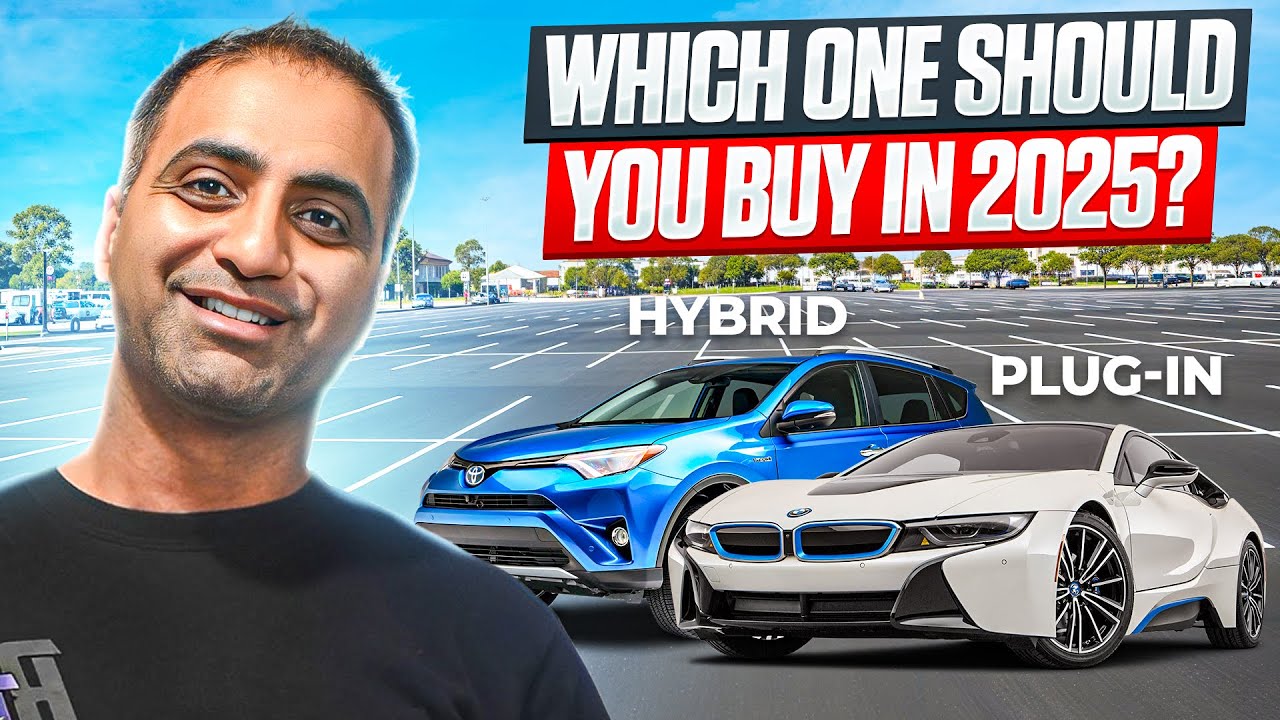
Plug-In vs Hybrid vs EV: Which One Wins In 2025?
plug-in, hybrid, EV, they all sound smart, but which one actually makes sense in 2025. So, here’s a deal. The UK’s electric future is getting closer. Bans on new petrol and diesel cars are creeping in, and manufacturers are pushing out everything from hybrids to full EVs. But what’s actually worth it for you? The truth is, it depends largely on how you drive, where you live, and what matters most to you. cost, convenience, or clean energy. First, full EVs. If you’ve got a driveway and you can install a home charger, EVs are hard to beat. Charging at home is cheap, maybe5 to£10 per 100 miles, and EVs are quiet, smooth, and low maintenance. But if you live in a flat, rely on public charging, or do long trips often, the charging infrastructure in the UK still has gaps. And costs can rocket as high as a Falcon 9 rocket if you are using expensive rapid chargers. So EVs make a lot of sense for urban drivers, short commutes, or people who want the quietest, cleanest option. As long as a charging setup works for you. So let’s jump into plug-in hybrids. These combine a petrol engine with a battery one that you can charge. you get 20 to 40 miles of electric range, then the engine kicks in. If your daily drive is short and you can charge regularly, you could do most of your driving on electricity with the petrol engine there as backup for those longer road trips. But if you don’t charge it often, you’re just driving a heavier petrol car with worse fuel economy. So, plug-in hybrids are best for drivers who want flexibility, some mixed driving, and are happy to plug in most days. And finally, regular hybrids. No plug-in needed. These use a small battery and electric motor to assist the petrol engine, mostly at low speeds and in traffic, and you haven’t got to plug them in. They charge themselves as you drive and generally deliver better fuel economy without changing how you use the car. They’re ideal for drivers who want simplicity. You get decentish efficiency, more so in town than on motorways, lower emissions, and there’s no charging cables in the boot. If you do a mix of city and motorway driving and want to deal with public charges or installing a home unit, hybrids might be the easiest option. I mean, look, here’s my take, and I’ve had all three. The right choice depends on three simple questions. Number one, how far are you driving on a regular basis? If it’s mostly short trips, an EV or plug-in hybrid could work very, very well. Long distance drivers might want the backup and flexibility of petrol or a hybrid car. Two, can you charge at home? This one’s huge. If you’ve got a driveway and a charger, running an EV is cheap and easy. But if you don’t, you’ll be relying on public chargers, and that’s where things get messy and pretty expensive. Three, how much convenience are you willing to sacrifice? Cuz public charging can work, but it usually means waiting around, planning ahead, paying premium rates, downloading more apps than the number of kids Elon Musk has, and yeah, rocking up to a charger that may or may not even work. If that sounds like a headache, a hybrid or a plug-in might be the smoother option. There’s no perfect answer, but if you know those three things, your driving distance, your charging setup, and how much hassle you’re willing to deal with, the right choice gets a lot clearer. Hey, I’m Mo. I work in tech. I break down all things cars. If you don’t know your over steer from your under steer, and the only ice you’ve seen lately is in your latte, no judgment. You’re in the right place.
With the UK’s ban on new petrol and diesel cars on the horizon, understanding your options is key. This video breaks down the differences between **phev vs hybrid**, **plugin hybrid**, and EVs to help you make the best choice. We’ll also consider **ev charging** options and the impact of **ev ownership** on your lifestyle.