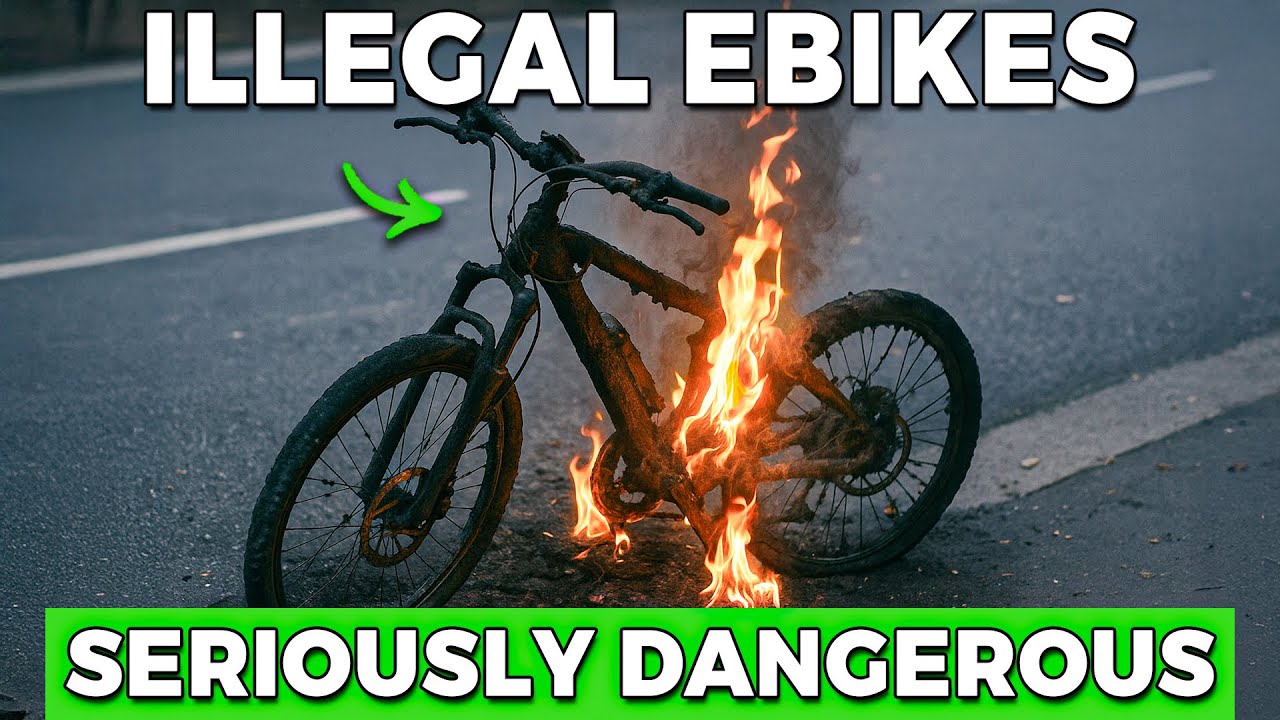
These 9 Ebikes Should Be ILLEGAL!
Ebike manufacturers don’t want you to know that their safety certifications are complete fiction. What if I told you that the bike advertised as safe and reliable could burn down your house while you sleep? That’s not fear-mongering. 268 fires in New York City alone last year, and 18 people died. Imagine spending $2,000 on what looks like the perfect eco-friendly commuter only to discover it’s designed by companies who clearly never tested their batteries properly. In this video, I’m counting down the nine most dangerous ebikes that should be illegal in America. And trust me, number one might shock you. It’s so dangerous that 22,000 units are scattered across the country like ticking time bombs. Stick with me to the end because this isn’t just a ranking. It’s your safety survival guide to avoid the death traps disguised as premium ebikes. Let’s start with something that might shock you. In 2023 alone, New York City recorded 268 ebike fires. These weren’t minor incidents. 18 people died. The problem has gotten so severe that fire departments across the country are treating ebike batteries like unexloded bombs. Yet, millions of Americans continue riding these potential death traps every single day. completely unaware of the dangers lurking beneath their seats. The Consumer Product Safety Commission has been overwhelmed trying to keep up with recalls, but their budget of just $139 million isn’t enough to protect consumers from the flood of dangerous products entering the market. This means it’s up to you to know which ebikes to avoid at all costs. Number nine, Super 73 Z Miami SE. Starting our countdown at number nine is the Super 73 Z Miami SE. A bike that’s become incredibly popular among urban riders with its retro motorcycle styling and hefty price tag of $2 to $3,000. It looks like the perfect ride for city streets, but there’s a critical flaw hiding in plain sight. The disc brake calipers retaining pin can loosen without warning. When this happens, you lose braking power completely. Imagine flying down a hill at 28 mph, squeezing the brake lever, and nothing happens. That’s exactly what happened to multiple riders, leading to a recall of 1,400 units. But the problems don’t stop there. The Super 73 community has a culture of modifications that often push these bikes beyond legal limits. Reddit forums are filled with discussions about power upgrades and speed modifications that can turn a legal ebike into something that requires moped registration and licensing. Many riders don’t realize they’re breaking federal law by exceeding the 750 W motor limit or the 20 mph throttle speed restriction. The modification culture around Super 73 bikes creates additional dangers that go beyond the original design flaws. Users frequently install higher powered motors, remove speed limiters, and modify battery systems to increase range. These modifications void warranties, create safety hazards, and can make the bikes illegal to operate on bike paths and public roads. What makes this particularly concerning is that Super 73 has marketed itself as a lifestyle brand, attracting riders who prioritize style over safety. The company’s social media presence glorifies high-speed riding and aggressive modifications. Creating a community where dangerous behavior is normalized and even encouraged. When your brakes can fail and your bike might be illegal to ride on public roads, you’re looking at a recipe for disaster that extends far beyond the original manufacturer’s responsibility. Number eight, electric ebikes with recalled disc brake calipers. Moving to number eight, we have electric ebikes manufactured between November 2022 and May 2023. These bikes priced around $1,000 to $1,200 seem like a great value proposition, but that value comes with a hidden cost that could end up costing you everything. The disc brake calipers can fail completely, leaving riders without stopping power. Four incidents have been reported so far with two resulting in serious injuries including cuts, scrapes, and at least one broken bone. When you’re riding at electric assisted speeds, brake failure isn’t just inconvenient. It’s potentially fatal. The company has issued repair kits and offered up to $100 for professional installation. But the damage to rider confidence is already done. forums are filled with concerned owners questioning the reliability of their bikes and wondering what other components might fail without warning. What makes this particularly concerning is that brake failure often happens gradually. You might notice your stopping distance increasing slightly, but by the time you realize there’s a serious problem, you could already be in a dangerous situation. The gradual nature of the failure means riders often adapt their behavior without realizing they’re compensating for a serious safety defect. The electric brake recall highlights a broader problem in the ebike industry. Cost cutting measures that compromise critical safety components. Brake systems are literally the difference between a safe stop and a serious accident. Yet manufacturers continue to use substandard components to maintain profit margins. User reports describe scenarios where riders were approaching intersections or navigating traffic when their brakes suddenly lost effectiveness. In urban environments where split-second stops can prevent collisions with cars or pedestrians, brake failure isn’t just an inconvenience, it’s a life-threatening emergency. Number seven, Rad Powerbikes Rad Wagon 4. At number seven, we have the Rad Powerbikes Rad Wagon 4, a cargo bike that sold for around $2,000 between September 2020 and August 2022. This bike was marketed as a family-friendly solution for transporting kids and cargo, making its safety issues even more disturbing. The tires can blow out, deflate suddenly, or separate from their sidewalls without warning. This has resulted in 137 reported incidents and eight injuries, including road rash and broken bones. When you’re carrying children or heavy cargo, a sudden tire failure can cause catastrophic crashes. The problem seems to stem from inadequate tire construction that can’t handle the additional weight and stress of cargo hauling. Owners reported that the tires would fail even during normal use, not just under extreme conditions. Some experienced multiple tire failures on the same bike, suggesting a fundamental design flaw rather than isolated manufacturing defects. The Rad Wagon 4 was specifically designed for families with marketing materials showing parents transporting children to school and families enjoying recreational rides together. The tire failure issue turns these wholesome activities into potential disasters. A tire blowout while carrying two children at 20 mph can result in serious injuries to the most vulnerable passengers. What makes this case particularly heartbreaking is the trust families placed in Rad Powerbikes. Parents who wanted to reduce their environmental impact and spend quality time with their children chose cargo ebikes as a healthy, sustainable transportation option. Instead, they got a product that could injure their kids without warning. Cargo bikes carry additional liability because they’re often used in family situations where adults are responsible for children’s safety. When a product marketed for family use proves dangerous, it represents a betrayal of trust that extends beyond typical product liability issues. Rad Powerbikes has provided free tire and rim strip replacements, but the fact remains that hundreds of families trusted this bike with their most precious cargo only to discover it could fail at any moment. Number six, Santa Cruz Heckler 9. Number six might surprise you because it involves a premium brand. The Santa Cruz Heckler 9. Manufactured before February 20th, 23 carries a price tag that puts it in the luxury category of e- mountain bikes. Yet, even this high-end machine harbors a dangerous secret that proves price doesn’t guarantee safety. The 720watth lithium ion battery can overheat during charging, creating a fire hazard. Three fires have been reported, causing significant property damage. While no injuries were reported in these specific incidents, the potential for tragedy is obvious. What makes this case particularly interesting is that it demonstrates how even reputable, expensive brands can have serious safety flaws. Many consumers assume that paying premium prices guarantees better safety. But the Heckler 9 proves that assumption wrong. The fires occurred during charging, which means the danger exists even when the bike isn’t being ridden. Your garage, basement, or wherever you charge your ebike becomes a potential fire zone. For many owners who spent $4 to $6,000 on a premium e- mountain bike, the garage storage area also houses other expensive equipment that could be destroyed in a battery fire. Santa Cruz has built a reputation over decades as a premium mountain bike manufacturer with excellent quality control and customer service. The Heckler 9 recall represents a rare black mark on the company’s safety record, but it also highlights how even the most respected brands can struggle with the complexities of lithium ion battery integration. Santa Cruz has issued free battery replacements and worked closely with owners to resolve the issue, demonstrating how a responsible manufacturer should handle safety recalls. However, the incident raises questions about battery testing and quality control across the entire industry. If you’re thinking about subscribing to stay updated on the latest safety issues affecting electric vehicles and tech products, now would be a great time to hit that subscribe button. We’re just getting to the most dangerous bikes on this list, and what’s coming next will shock you. The next four ebikes have caused actual explosions, house fires, and life-threatening injuries. Number five, Fung QSF7 Pro. At number five, we encounter the Fang QSF7 Pro, a bike that represents everything wrong with inadequate safety oversight. Sold between May and December 2024 for $700 to $1,200. Approximately 180 units made it into American homes before the true extent of the danger became clear. The lithium ion batteries don’t just overheat, they ignite with explosive force. Nine fire incidents have been reported with two causing $12,000 in property damage each. But here’s what makes this case truly outrageous. When the Consumer Product Safety Commission tried to issue a recall, the manufacturer, Shenzhen Fengi, simply refused. This refusal to cooperate with safety authorities means the CPSC had to issue an unprecedented warning advising consumers to stop using the bikes immediately and dispose of the batteries at hazardous waste facilities. The company’s complete disregard for consumer safety represents a new low in the ebike industry. The batteries in these bikes are so dangerous that they’re being treated like hazardous waste. Think about that for a moment. You could have brought something into your home that fire departments consider as dangerous as toxic chemicals or explosive materials. The Fang QS case exposes a critical weakness in the American product safety system. When foreign manufacturers refuse to cooperate with recalls, American consumers are left vulnerable with no effective recourse. The company can simply walk away from the American market, leaving dangerous products in homes across the country. The nine-fire incidents attributed to the F7 Pro occurred during various activities, charging, riding, and even while the bikes were turned off and stored. This unpredictability makes the F7 Pro particularly dangerous because owners can’t identify specific behaviors or conditions that trigger fires. Number four, Gyro C3. Number four takes us to the Gyroar C3. Sold between November 2020 and September 2022 for around $600, the model 10S4P battery packs in these bikes are essentially time bombs waiting to explode with a track record that proves their danger isn’t theoretical. Two injuries have been confirmed, including burns and smoke inhalation requiring medical treatment. When a battery pack ignites, it doesn’t just catch fire. It can explode with enough force to cause serious burns and fill enclosed spaces with toxic smoke that can be lethal in confined areas. What makes the Gyroar C3 particularly dangerous is that the battery failures seem unpredictable. Owners reported that their bikes were working normally one day and then suddenly caught fire the next. There’s no warning system, no gradual degradation that might alert you to danger. The company has offered free replacement battery packs, but the psychological damage is already done. How do you trust a replacement battery from the same company that made the original fire hazard? Many owners have simply abandoned their bikes rather than risk another potential explosion. The Guyar C3 fires demonstrate how lithium-ion battery failures can escalate rapidly from minor overheating to full combustion in seconds. Victims describe hearing popping sounds followed immediately by flames and smoke, leaving no time to react or take protective measures. The unpredictable nature of Guyro C3 battery failures means owners lived in constant uncertainty about their bike’s safety. Unlike mechanical failures that often show warning signs, battery thermal runaway can occur without any preceding symptoms, turning routine activities like charging or storage into Russian roulette. Number three, Pacific Cycle Ascend Minet. The bronze medal for dangerous ebikes goes to the Pacific Cycle Ascend Minet. Recalled in January 2024, like its sister model, the Cababrio, this bike suffers from defective wiring in the lithium ion battery that can overheat and cause fires. Sold at Bass Pro Shops and Cabelas, these bikes attracted outdoor enthusiasts who trusted these well-known retailers to stock safe products. That trust was misplaced. The wiring harness defect creates a fire hazard that can activate during charging or even while riding. The recall was issued after fire incidents demonstrated the severity of the problem. Both retailers have offered full refunds, but the damage to consumer confidence in the outdoor recreation industry is significant. What’s particularly troubling is that these bikes were sold by mainstream American retailers with established reputations. If Bass Pro Shops and Cabelas can’t guarantee the safety of their ebikes, where can consumers turn for reliable products? The Minouret fires occurred in various settings: home garages, outdoor campsites, and retail locations. This diversity of fire locations demonstrates that the wiring defect doesn’t require specific environmental conditions to activate, making it impossible for owners to create safe charging environments. The outdoor recreation context makes minouret fires especially dangerous because they often occur in remote locations where fire departments can’t respond quickly. A battery fire during a camping trip could spread to surrounding vegetation, creating wildfire risks that endanger entire communities. Number two, Pacific Cycle Ascend Cababrio. Taking the silver medal for dangerous design is the Pacific Cycle Ascend Cababrio. This bike shares the same fundamental flaw as the Minouret. Defective wiring in the battery system that creates fire hazards that can activate without warning. Three fires have been reported with one causing secondderee burns to a rider. Secondderee burns from an ebike fire represent a level of injury that can require skin grafts and leave permanent scarring. The victim’s life was forever changed by a defective product that should never have made it to market. The Cababrio was also sold at Bass Pro Shops and Cabelas, meaning thousands of outdoor enthusiasts brought these fire hazards into their homes, garages, and camping equipment. The recall notice specifically warns users to unplug their bikes immediately and return them for full refunds. But here’s what the recall notice doesn’t tell you. The psychological trauma of experiencing an ebike fire can last long after the physical injuries heal. Victims report anxiety about charging any electronic device and persistent fears about fire safety that affect their daily lives. The secondderee burns suffered by the Cababrio victim required multiple skin graft surgeries and months of rehabilitation. Medical bills exceeded $50,000, and the victim still experiences limited mobility and chronic pain 2 years after the incident. Emergency responders treating Cababrillo fire victims noted that lithium ion battery burns are particularly severe because the fires burn at extremely high temperatures and are difficult to extinguish with conventional methods. Standard fire extinguishers can’t stop lithium ion thermal runaway. Number one, Anier AM00001907. And now the most dangerous ebike currently being recalled in America, the Ansher AM00001907. Sold from January 2016 to June 2022, this bike has created a trail of destruction that spans 6 years and 22,000 units sold through Amazon, Walmart, eBay, and other major platforms. The lithium ion batteries don’t just overheat. They ignite, explode, and spark with enough force to cause serious burns. Six incidents have been officially reported, resulting in four burn injuries serious enough to require medical treatment. But given the number of units sold and the time span involved, the actual number of incidents is likely much higher. What makes the anshare particularly insidious is that it was sold as an affordable entry point into ebiking, priced between $280 and $930. Many buyers were firsttime ebike owners who had no idea what safety features to look for or what warning signs to watch for. The recall notice instructs owners to stop using their bikes immediately and contact Anier for free replacement batteries and mounts. But here’s the problem. Multiple owners have reported that Anshir’s customer service is essentially non-existent. Phone calls go unanswered, emails are ignored, and many owners are left with dangerous bikes they can’t safely use or effectively replace. The Anier case represents everything wrong with the current ebike market. Inadequate safety testing, poor quality control, non-existent customer service, and a regulatory system that can’t keep up with the pace of dangerous products entering the market. The six-year sales period means an AM 001907 bikes are scattered across America in garages, basement, and storage units where owners may not even be aware of the recall. Social media groups dedicated to Anshare owners are filled with posts from people trying to locate friends and family members who might own these dangerous bikes. The 22,000 units sold represents a massive safety crisis hiding in plain sight. Statistical analysis suggests that if even 1% of these bikes experience battery failure, we’re looking at 220 potential fire incidents. The four confirmed burn injuries likely represent a small fraction of the actual harm caused by these defective products. Nier’s customer service failures compound the safety risks because owners can’t get help even when they want to address the problems. The company appears to have simply abandoned American customers while leaving dangerous products in their homes. The bigger picture. These nine ebikes represent just the tip of the iceberg. The fundamental problem isn’t just individual product defects. It’s a system that allows dangerous products to reach consumers in the first place. Federal law defines ebikes as having motors under 750 watts and maximum throttle speeds of 20 mph. Class 1 bikes provide pedal assistance up to 20 mph. Class 2 bikes have throttles that work up to 20 mph. Class 3 bikes provide pedal assistance up to 28 mph. Anything beyond these limits legally becomes a moped, requiring registration and licensing. But enforcement is inconsistent and many manufacturers simply ignore these regulations. The result is a marketplace flooded with products that range from merely non-compliant to actively dangerous. The battery certification issue is particularly critical. UL2849 certification ensures that lithium-ion batteries meet basic safety standards, but many imported ebikes use non-certified batteries to cut costs. These uncertified batteries are the source of most ebike fires. The Consumer Product Safety Commission’s limited budget means they can only investigate the most egregious cases, leaving thousands of potentially dangerous products on the market. International manufacturing creates enforcement challenges that didn’t exist when most consumer products were made domestically. What this means for you, if you own any of these nine ebikes, stop using them immediately. Don’t charge them, don’t ride them, and definitely don’t store them in your home. Contact the manufacturers for recalls or refunds. And if they’re unresponsive, dispose of the batteries at hazardous waste facilities. For future eBike purchases, look for UL2849 certification. Buy from reputable dealers who provide customer service and never leave ebikes charging unattended or overnight. Check the Consumer Product Safety Commission website regularly for new recalls. The ebike industry has enormous potential to transform transportation and reduce environmental impact, but only if safety becomes the top priority. Until manufacturers are held accountable for producing safe products, consumers must protect themselves through education and careful purchasing decisions. Check out my video 20 overpriced electric bikes that just aren’t worth it to see which expensive models are complete ripoffs. Now that you know the dangerous ones to avoid, you need to know which overpriced bikes will just drain your wallet without delivering real value.
E-bike manufacturers don’t want you to know that their “safety certifications” are complete fiction. What if I told you that the bike advertised as safe and reliable could burn down your house while you sleep? That’s not fear-mongering – 268 fires in New York City alone last year, and 18 people died. Imagine spending $2,000 on what looks like the perfect eco-friendly commuter, only to discover it’s designed by companies who clearly never tested their batteries properly.
▶️ Watch more videos from Tech Charge: 🔋
_____________________________________________
The UGLY Truth About Electric Cars…
_____________________________________________
When Will Electric Cars Become Affordable
_____________________________________________
The INSANE History of Electric Cars
_____________________________________________
This Tiny EV is a HUGE SUCCESS
_____________________________________________
First EV to Reach 1000 MILES Range
_____________________________________________
The First EV to Reach 1,000 km Range
_____________________________________________
🔔 Subscribe: https://bit.ly/30vR5eV