Are All Season Tyres Compromised!? (Cross Climate 3)
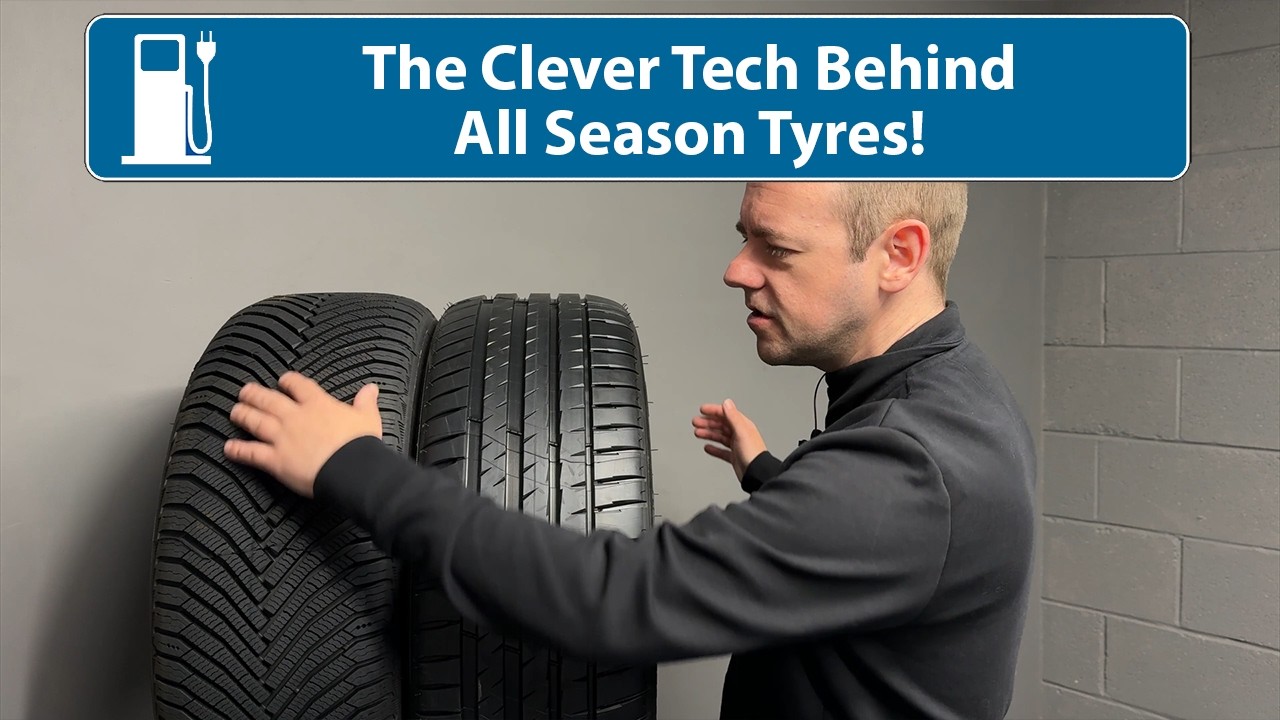
How can you have a true allseason tire that’s got the Three Peaks Mountain Snowflake logo, which is a certification for snow performance? How is that also very good at performing in the summer months? Logically, in my head, this summer tire isn’t very good in winter, and it’s not. Just as this winter tire here isn’t any good in summer, they are optimized for different things. So, in my head again, I’m thinking an allseason tire must have a significant compromise. You can’t have your cake and eat it. So, how can you have all season performance both in the snow and in the wet and in the dry and in the hot weather? How can you have all this? What’s the basic engineering principles behind it? For the last 10 yearsish, I’ve used allseason Michelin crossclimate tires. the first generation and then the second generation. I’ve probably done at least 150,000 miles on those tires bought with my own money. But now there’s a new generation of Crossclimate, the Cross Climate 3 tires. I, just to be open, are now working with Melan. So, I’ve used these for 10 years, but over the last few months, I’ve got access to their engineering knowledge, their designers, their product specialists, and I’ve done hundreds of miles on those Crossclimate 3 tires and the new variant, the Cross Climate 3 Sport. I’ll tell you the difference between those two near the end of the video. But in this, I want to basically delve into the the basic principles behind tire design and how you can have an allseason tire that has no real compromises. There are two basic principles that I want to concentrate on when it comes to tires in this video. And I’ve really dumbed it down so I can understand it. And the two things are compounds. So that’s what the tires made from and tread features. As you can see, between these winter and summer tires, they’re very different. So let’s start with the compounds. What the tires are made from. There’s something called glass transition temperature which essentially means that as a compound gets colder it gets harder like glass and in tire speak it becomes less effective it becomes stiffer and it loses some of its capabilities. So essentially this summer tire it’s designed to operate in warmer temperatures. When it’s operating in sub-zero temperatures for example then the compound gets harder and well that’s not great for performance. Whereas the winter compounds, they’re designed to operate at lower temperatures and the compounds are more flexible and you get the features of the treads because they’ve still got that flexibility. If it gets too hot, if it gets too warm, the winter tire will be too soft and again too flexible. It will wear quicker and ultimately that’s why you have a difference between summer and winter compounds. Enter the allseason tire and in the UK with the less extreme weather, this is perfect for us. But very basically put, the compound of the Cross Climate 3s and the previous generations before them are essentially closer to that of a winter tire than they are a summer tire. Now let’s move on to the tread features. And as I said earlier, these are very different between the summer and the winter tire, let alone the crossclimate allseason tire, which again are quite unique. So, as you can see with this summer tire, we have very few cuts or cypes, whereas the winter tire has got lots of cypes because it needs to be flexible. It needs to dig into that snow. So, if I’m using my hands as an example, lots of these cuts or cypes would be like me digging away with my hands like a claw into the snow, whereas the summer tire would be like punching at the snow. I’m not going to get very far. And these longitudinal grooves, which is easy for you to say, um, and lack of sightes, are what traditionally summer tires will have. Very, very simply put, the tread features of the crossclimate tires, all generations, are closer to that of a summer tire than a winter tire. But the compounds that they’re made from are closer to that of a winter tire than a summer tire. So essentially, we end up meeting somewhere in the middle. But it doesn’t end there. There’s some other clever features which make this a relatively unique tire, certainly when it launched, which means it’s usually at the top of the charts. Tires like this often have square contact patches, so that’s going to be flat in contact with the ground. Whereas the Cross Climate 3es and previous generations have a more rounded contact patch. The tread pattern, as you can see in this terrible example here, displaces the water whilst you’re driving through heavy rain. But the rounded contact patch means that it also aids in getting rid of any water and preventing aquiplaning. Ultimately, yes, this tire in its correct optimized operational temperature and environment will be better than an allseason tire, just like this winter tire in winter will be better than an allseason tire. But you have to swap the tires around twice a year. You have to store them somewhere, which we luckily enough do have for the UK once more, which this is a very UK ccentric video. With our dull weather, an allseason tie will be perfect because the absolute extremes that these will beat it at, we very, very rarely have. If it snows here, then usually people just don’t go to work for the one or two days of the year that it does get to that level. And well, you just stay at home, don’t you? Now, I want to talk about why you end up typically paying more for a premium tire such as a Michelin one compared to unknown brand number one. Well, let’s look at the tread features again. These are all and the cross climates as well, 100% depth tread features. So, everything we’ve just talked about in terms of the cypes and the different tread features, you will get that throughout the entire life of the tire. So right down to the legal limit, you’ve got all the tread features that you had when the tire was new. So that means that the tooling that Michelin use, it not only has lots more thinner sypes or cuts in the tire, which means the tooling needs replacing more often, but the fact it has to go full depth again, it makes it more expensive to make because the tooling has greater stresses and ultimately is more expensive to maintain and therefore more expensive to produce the tire. Another factor, and this is something I’m very privileged to have seen recently, is the R&D that goes behind the tires. So, this is just one tiny part of the whole system. I was recently at the Moto GP and it was fantastic and again really privileged to be there. But part of being there was seeing the Michelin workshop. So this is essentially where Michelin provide the tires for the riders and the teams that are racing and then they go out and do their thing and then all of those tires, every single one of them comes back to Michelin. They then get analyzed and studied and bear in mind these will be under extreme racing stress. They will get studied to see if they can improve the compound, improve the tread depths and features and various other stuff. And that alone isn’t just because you see the Michelin logos on your TV when you’re watching a race. It’s because it provides a huge amount of data to go into the R&D for new tires like Formula 1. Stuff that’s developed for a Formula 1 car to make it as quickly or as efficiently as possible around a track that then trickles down into our cars eventually. So that’s again another reason why you typically end up paying more for a premium tire over the cheap stuff. And most tires, if not all tire reviews or tests are done when the tire is like this, brand new. So you’ve got all the tread features. So a cheap tire that wears down and loses half of its features will perform much better when it’s brand new as opposed to when it’s well nearly fully worn. This for me I see as a huge advantage with a premium tire like the Michelans because I want the same tread features when it’s near the legal limit as I do when it was brand new. They are very much a false economy are cheap tires and I say this time and time again not just because they don’t last as long. This should last a lot longer than again a cheap unknown brand. So, the longevity is enough for me. But those tread features, that is a big big part because again, most tires are tested when they’re brand new, not when they’re fully worn. Now, I know that tire videos typically don’t do that well on the channel, but as a certified tired nerd, me spending time with the Michelin product specialists and and poking at their brains for all this knowledge, I’m like a pig in their houses. Now, I said earlier I was going to mention the difference between the Cross Climate 3es and the Cross Climate 3 Sports in terms of how they differ. I’ll be honest, before I turned up in Switzerland and did hundreds of miles on all types of tires in different cars on different roads in the mountains and down below near the lakes, I thought, well, they’ve probably just changed the tread pattern a little bit to make it grippier and called it the Sport. Boy, was I wrong. So, the best way of putting this is think of the Cross Climate 3es, the standard version of an evolution of the twos, an upgrade if you will, a midlife facelift. You go from the Golf Mark 8 to the Mark 8.5 for example, and they’ve looked at stuff and improved on it in every category. That’s essentially the Crossclimate 3 in a nutshell. The Crossclimate 3 Sport, that’s next level compound stuff. That’s real nextG compounds and tri treads and they’ve put so much effort into it. It’s a completely different tire. This is the best compliment I could say to it. We drove for a few hundred miles in sporty cars, should we say, had some fun and ultimately if nobody told me what tires were on that car, if they said after the fact, what sort of genre of tire were you driving on then? You know, don’t look. What were you on? I would have probably said Pilot Sport fours or fives. I genuinely couldn’t feel the difference. I thought I was on some sports tires on that sportier car when I was on allseason crossclimate three sports. That is for me again the best compliment cuz that’s exactly what they were aiming for. It feels like a sports tire, but ultimately you’ve got the allseason capabilities. Yes, I’m working with Michelin. It’s always with a pinch of salt. Look at the independent reviews. Just just just go and look at it. I don’t need to say anything. It’s all in there. So once again, for the last 20 years, I’ve used Michelan tires. Nothing has changed. Even if I wasn’t working with them, I would still be saying the same thing I have said today. Crossclimate 3s now have become my next step in terms of what I recommend to people. And although it’s going to be a while for all sizes to come out, if you’ve got the availability for your car for those tires, then absolutely you can’t go wrong. So once more, thank you ever so much to Michelang for supporting the channel. Thank you for watching this video. I hope you find it interesting. I genuinely do because I do and I just want to try and pass that knowledge on in terms of why I say and I’ve always said this same thing. Tires are one of the most if not the most important part of a car. It’s what contacts you to the road. Don’t cheap out on it. Tires are often a distress purchase. Something people don’t want or like doing and then get surprised when all of a sudden someone says you need a new tire. I look at it very much the opposite. I’m like, brilliant. What can I get? How can I improve my efficiency, my ride, my handling, my performance in in in many different ways? Don’t forget about the Driving Home podcast that is back in the usual podcasty places. And if you look in the description of every video I’ve done, there’s a link to the second channel where the Driving Home podcast sits. And of course, members for 99 p a month can get videos on Sunday instead of Friday, helping the channel out. 99p a month. You can pay more if you think it’s worth more, or you can just pay less than a quid, which these days doesn’t get you much, but it does get you the membership. So, once more, thank you ever so much for watching. I’ll see you soon, and um let me know if you’re still watching it at this stage by typing the word in um uh treadware. Treadware, then I know you’ve been watching right to the end.
The clever engineering behind all season tyres means that you can actually have your cake and eat it!
2nd Channel: https://www.youtube.com/@drivingohm
Website: https://www.ev-man.co.uk
Twitter: https://twitter.com/evmanuk
Tesla Referral: https://ts.la/andrew31112
Octopus Referral: https://share.octopus.energy/ore-cobra-425
#tyre #electriccar #michelin