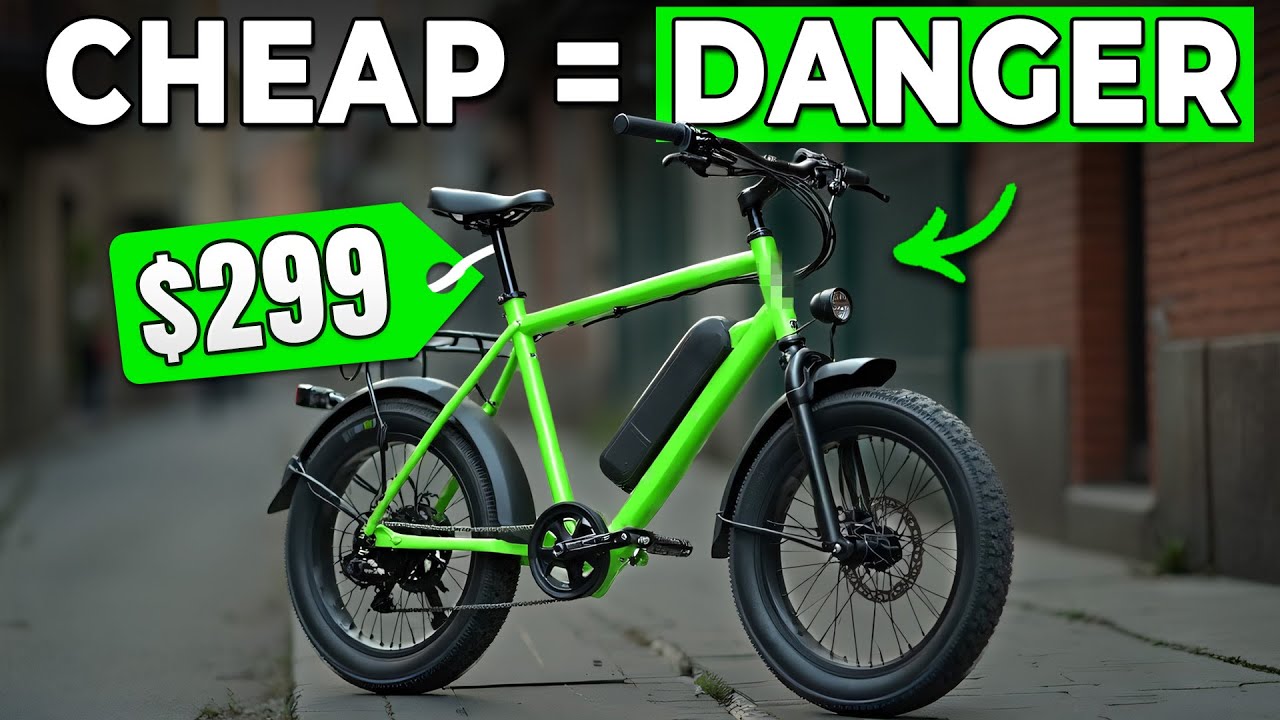
25 Cheap Electric Bikes That You Must AVOID
Electric bike manufacturers don’t want you to know that their safety certifications are complete fiction. What if I told you that the bike advertised as safe and reliable will literally burn your house down within months? That’s not fear-mongering. Hundreds of house fires and some manufacturers know their batteries are ticking time bombs. Imagine spending your hard-earned money on what looks like the perfect commuter solution only to discover it’s designed by people who clearly prioritize profit over your family safety. In this video, I’m counting down the 25 most dangerous electric bikes that could destroy everything you own in 2025. And trust me, number one might shock you. It’s so hazardous that it caused multiple house fires despite costing nearly $14,000. Stick with me to the end because this isn’t just a buyer’s guide. It’s your financial and physical survival guide to avoid the death traps disguised as convenient transportation. Number 25, unnamed $200 ebikes from Amazon and AliExpress. Starting our list are the generic $200 ebikes flooding online marketplaces. These bikes represent the absolute bottom of the barrel in terms of quality and safety. The most common complaint about these ultra cheap models is vibrating front brakes that make stopping both terrifying and ineffective. But that’s just the beginning of their problems. These bikes typically feature the cheapest possible components with no quality control whatsoever. The frames are often made from low-grade steel that can crack under normal riding stress. The batteries are completely uncertified and pose serious fire risks. When something breaks, and it will break quickly, finding replacement parts is virtually impossible because these are essentially disposable products designed to extract maximum profit from uninformed consumers. Number 24, Apass C1. The Apass C1 earned its spot on this list despite performing reasonably well in SAM testing. The fundamental build quality issues make it a dangerous choice for any serious riding. Expert reviews describe the overall construction as terrible with problems ranging from poor weld lines to structural defects that affect basic safety. The most concerning issue is the bent frame triangle that causes the wheel to be permanently crooked. This isn’t just an aesthetic problem. It affects handling, tire wear, and overall stability. The bike also features what reviewers call an overrated rear hub motor that doesn’t deliver the promised power output. Additionally, the super small battery severely limits range and longevity. When you combine structural defects with inadequate power systems, you get a product that fails to meet even basic transportation needs while potentially putting riders at risk. Number 23, GeForce AE. The GeForce AE has been identified as one of the worst bikes reviewed in 2024, earning this designation through multiple critical failures that make it unsuitable for adult riders. The most glaring issue is extremely low top speed of just 7.99 mph, which makes it slower than a brisk walk and completely impractical for any real transportation needs. Bike’s dimminionive size creates serious safety concerns as it cannot adequately support adult riders. The weight limit is so low that it becomes unsafe for most adults to use. These limitations aren’t just inconveniences. They represent fundamental design flaws that make the bike dangerous and essentially useless for its intended purpose. Expert reviewers deem the bike so poor that they couldn’t even complete full distance testing because of its obvious limitations and safety concerns. When professional reviewers refuse to fully test a product due to safety issues, that’s a clear indication that consumers should stay far away. Number 22. Concord 27.5 in models. Walmart brand. Concord ebikes sold exclusively through Walmart present a classic example of how low prices can mask significant quality and usability issues. While these bikes appear affordable on the surface, the hidden costs and limitations quickly add up to create a frustrating ownership experience. Assembly difficulties plagued these bikes from day one. Many owners report needing frequent adjustments to brakes and wheels just to make the bike ridable. The build quality reflects the low price point with visible rough welds and inconsistent paint application that suggests poor manufacturing standards. Most Concord models lack throttle control, offering only pedal assist functionality. This limitation becomes problematic when the motor fails or the battery dies, as riders are left pedaling a heavy, inefficient bicycle. The mechanical brakes are notably weak for the bike’s momentum, creating safety concerns, especially when riding downhill or in emergency stopping situations. Number 21, Fido D11 foldable bike. The FedO D11 represents everything wrong with trying to engineer a folding ebike on an extreme budget. The most immediately noticeable problem is the extremely loud, squeaking brakes that make the bike unsuitable for use in any quiet environment. But the brake noise is just the tip of the iceberg. The bike becomes essentially useless when the battery dies because it’s nearly impossible to pedal uphill due to the heavy weight and complete lack of suspension. This creates a dangerous situation where riders can become stranded if they misjudge their battery life or experience an unexpected power failure. The battery system itself presents multiple problems. It’s inconveniently heavy, bulky, and cannot be locked or secured to the bike, making it a prime target for theft. The folding mechanism, which should be the bike’s main selling point, is difficult to use and provides no method to lock the folded parts together for transport. Number 20. Hey models, Cityscape 2 Alpha. Hey Bike has earned its place on this list through consistent quality control failures and design issues that affect both safety and usabilities. Customer reports reveal a pattern of missing parts, wrong components, and mechanical failures that occur within days of purchase. Common issues include missing parts in shipments, incorrect chain guards that don’t fit properly, and front fork axle alignment problems that affect steering and handling. Broken plastic fenders and snapped spokes within days of purchase indicate poor material quality and inadequate stress testing during development. The electronic systems also present reliability concerns. The battery readout can be extremely unreliable, jumping significantly depending on riding speed and making it impossible to accurately gauge remaining range. The throttle experience is often described as underwhelming or spotty, failing to provide consistent power delivery. Number 19, Gora Z4 Lightfolding eBike. The Gora Z4 Light suffers from multiple mechanical and design issues that make it unreliable for regular use. The most frequently reported problem is the left crank that loosens repeatedly, creating a safety hazard and requiring constant maintenance that most riders aren’t equipped to perform. Tire quality presents another significant concern with reports of tires ripping easily under normal use. The company doesn’t provide warranty coverage for tire replacements, leaving customers to absorb these recurring costs. The weak shock system fails to provide adequate comfort over bumps, making longer rides punishing for the rider. Brake pad alignment issues cause constant rubbing and reduced efficiency. While the singlese design makes the bike extremely difficult to pedal without electric assistance once the battery dies. This creates dangerous situations where riders become stranded with a heavy, inefficient bicycle. Number 18, Hyperbicles E-Ride 700C Bolt Pro. Hyperbicles consistently delivers what can only be described as minimum viable products that prioritize low cost over any semblance of quality or reliability. Customer reports reveal a devastating pattern of failures that begin immediately upon delivery and continue throughout the bike’s short lifespan. Common delivery issues include missing screws, broken kickstands, and clunky gear shifts that make basic operations difficult. Change frequently pop off during normal riding, while internal wiring detaches after minimal use. These aren’t isolated incidents. They represent systemic quality control failures. Wheel quality is particularly problematic with bikes often arriving with overtightened, untrue, or out of round wheels that affect both safety and ride quality. The cheapest possible components lead to predictable failures, including controller malfunctions, junky brake switches, and easily flattened tires. Number 17, Aventon. Customer service issues. While Aventon produces some decent ebikes, their inclusion on this list stems from widespread customer service failures that can turn minor issues into major headaches. The company has developed a reputation for unresponsive and unhelpful customer support that leaves customers stranded when problems arise. The most common complaint involves the company’s refusal to provide phone support, forcing customers to rely on slow email and chat systems that often provide conflicting or unhelpful information. Many customers report being completely ghosted by customer service representatives with promised call backs and follow-ups that never materialize. Technical issues with Abaton bikes include battery malfunctions, mysterious error codes, and bikes that overheat on hills. While these problems might be manageable with proper support, the company’s poor customer service turns minor technical issues into major frustrations. If you’re enjoying this deep dive into ebike safety and want to see more content about avoiding dangerous electric vehicles, make sure to subscribe and hit that notification bell. Number 16, Electric Bike Company, EBC models. The Electric Bike Company has earned widespread criticism for misleading marketing, poor product quality, and customer service practices that border on fraudulent. Customer reports reveal a consistent pattern of bikes that don’t match advertised specifications, and performance claims that prove completely false. Misleading information starts with basic fit and sizing. Many customers receive bikes that don’t fit as advertised, creating safety hazards and making the bikes essentially unusable. The wobbly construction and weak motor performance, especially on hills, make these bikes unsuitable for their intended purposes. Shipping issues compound the quality problems with bikes frequently arriving with missing or incorrect parts. The battery systems are particularly problematic with rapid degradation occurring far sooner than warranted performance should allow. When customers attempt to claim warranty coverage, the company often refuses to honor their commitments. Number 15, unnamed, no-name brands from online marketplaces. This category encompasses the dozens of randomly named brands flooding online marketplaces like Amazon, Walmart, and AliExpress. Examples include Kwi, Hezo, Koshe Wheel, Totem, Same Bike, AMAC, Highland, Akbess, Jans, Snow, Ridstar, Q, Vivy, Aquile, Dower, Az, and many others with similarly generic names. These brands represent what experts call accidents waiting to happen. They typically lack any quality or safety checks, using lowquality, unbranded batteries and chargers that significantly increase fire and malfunction risks. The random brand names are often generated specifically to evade accountability when products fail or cause damage. Customer support is virtually non-existent for these brands with many companies disappearing entirely once they’ve sold enough units to make a profit. Replacement parts are impossible to source because the companies use proprietary components that aren’t available through normal supply chains. Number 14, Sonors. Sondors represents a particularly tragic case of a once promoting company that appears to have collapsed, leaving customers completely without support or recourse. The company seems to have gone out of business entirely, making it impossible for customers to get support for their bikes or receive products they’ve already paid for. Reports indicate serious issues with factory payments and a complete failure to deliver products to customers who place deposits. This leaves existing Sondors owners with bikes that cannot be serviced or repaired, effectively turning them into expensive paper weights. The connection to other problematic brands is concerning as Jetson bikes, which have been linked to ebike fires, were sometimes sold through similar channels as Sundor’s products. This suggests potential quality control issues that extend beyond just customer service failures. Number 13, Bellatric Discover 1, customer service issues. Bellatrix has earned its place on this list primarily through what customers describe as horrible customer service that makes resolving even minor issues nearly impossible. The company’s support approach seems designed to frustrate customers into giving up rather than actually solving problems. When customers report issues, Below Track’s typical response involves sending unhelpful videos that don’t address the actual problems. When these generic solutions inevitably fail, the company directs customers to take their bikes to local shops, many of which refuse to service below track bikes due to known compatibility and reliability issues. Common technical problems include lights that won’t turn off without removing the battery entirely, creating both inconvenience and potential safety issues. Motor controller failures are also frequently reported, often occurring outside the warranty period or being denied coverage through technical loopholes. Number 12, ECEL’s five-star full suspension frames. The ECEL’s five-star represents a particularly dangerous category of ebike where structural defects can lead to catastrophic failures during normal riding. These bikes are known for consistent rear swing arm weld failures that occur not from crashes or abuse, but during regular riding conditions. The failures typically occur where the tubing connects to the dropout area, indicating fundamental design defects rather than manufacturing anomalies. The undersized tubing cannot withstand the torque generated by the 750 to 1,000W rear hub motors commonly installed on these frames. Most concerning is that these failures occur on bikes less than 2 years old, indicating that the structural problems manifest quickly rather than developing over extended use periods. The frames are often deemed completely unfixable and need to be recycled entirely when the welds fail. Number 11, Huffy ebikes. While Huffy offers apparent affordability for new ebike riders, critics consistently site a fundamental lack of refinement and quality compared to specialized ebike brands. The company’s approach seems to prioritize low initial cost over long-term reliability and customer satisfaction. Battery life issues are among the most commonly reported problems with Huffy ebikes experiencing power system failures far sooner than customers expect. Mechanical reliability problems also emerge too soon after purchase, indicating poor component selection and quality control. Perhaps most problematic is the limited opportunity for test rides before purchase. Most Huffy ebikes are sold primarily online or through big box stores where knowledgeable staff and test ride opportunities are unavailable. This forces customers to rely on marketing claims rather than actual performance evaluation. The combination of quality issues and limited pre-purchase evaluation opportunities creates a particularly risky buying situations where customers often discover problems only after they’ve committed to the purchase and begun experiencing failures. Number 10, Jetson Electric Bikes. Jetson Electric Bikes has earned a place on this list due to serious safety concerns that have resulted in official recalls and even deaths. While the company produces various micromobility products, their safety record across product lines raises serious concerns about their overall approach to product development and testing. The most serious incidents involve fire hazards that have been linked to multiple deaths. These aren’t minor technical issues, but fundamental safety failures that pose immediate threats to users and their property. The recall history indicates systemic problems with battery safety and quality control. Even beyond the most serious safety issues, Jetson products frequently suffer from poor repairability and inadequate customer support. When problems arise, customers often find themselves unable to get parts or service, effectively rendering their purchases worthless. The connection between fire hazards and deaths makes jets and products particularly concerning. When a transportation device poses life-threatening risks, the low purchase price becomes irrelevant compared to the potential consequences of product failure. Number nine, Cannondale Tossorro Neo X Speed. The inclusion of a Cannondale product on this list demonstrates that even established bicycle manufacturers can produce ebikes with serious safety issues. The Tazoro Neo Xpeed has been subject to official recalls due to fall and injury hazards that pose immediate risk to rider. The recall designation indicates that regulatory authorities have determined the bike poses unacceptable safety risks that could lead to serious injuries. This official recognition of danger makes the bike unsuitable for use regardless of other performance characteristics. For an established brand like Cannondale, a safety recall represents a particularly serious failure in their development and testing processes. The company’s reputation in traditional bicycles doesn’t necessarily translate to ebike safety and reliability. The recall status means that even if offered at attractive prices, these bikes should be avoided entirely due to the documented safety hazards that led to official regulatory action. Number eight, gyro ebikes. Thyroid ebikes have been subject to official recalls due to fire and burn hazards, placing them in the category of products that pose immediate threats to user safety and property. Fire hazards in ebikes are among the most serious safety concerns because they can lead to property damage, injuries, and deaths. The recall designation indicates that regulatory authorities have determined these bikes pose unacceptable fire risks that make them dangerous to own or operate. Battery fires can occur during charging, storage, or use, making these bikes hazardous even when not being ridden. Fire hazards are particularly concerning because they can affect not just the rider, but also family members, neighbors, and property. Ebike fires can spread rapidly and be difficult to extinguish, creating risks that extend far beyond the immediate user. The official recall status makes these bikes legally problematic to sell or use in many jurisdictions, adding legal complications to the safety concerns that should make consumers avoid these products entirely. Number seven, Rad Powerbikes Rad Wagon 4. The Rad Wagon 4 has been subject to a significant recall due to tire safety issues that have resulted in multiple injuries and numerous reports of dangerous failures. Despite Rad Powerbik’s generally positive reputation, this specific model demonstrates serious design and quality control failures. The recall involves misaligned rim strips that cause tubes to pop and damage tires along with ribbed sidewall tires that can go flat unexpectedly. These failures create immediate crash risks as riders lose control when tires suddenly fail during operation. The scope of the problem is significant with 137 reports of tires blowing out, deflating, and separating from sidewalls. These failures have resulted in eight injuries, including road rash, cuts, bruises, broken arms, and broken wrists. The injury reports demonstrate that these aren’t minor inconveniences, but serious safety hazards. Even though this is a higherpriced ebike at approximately $2,000, the serious safety issues and recall status make it a cautionary example that demonstrates how even reputable manufacturers can produce dangerous products that should be avoided. Number six, electric XP3. Specific models with faulty brake calipers. The electric XP3 has been subject to recalls due to faulty disc brake calipers that pose crash and injury hazards. Brake failures represent among the most dangerous types of ebike defects because they directly affect the rers’s ability to stop safely in emergency situations. Consumer reports indicate additional brake issues beyond the recalled models, including hydraulic rear brakes that barely engage and persistent squealing after brake pad replacement. These ongoing brake problems suggest systematic issues with brake system design and quality control. The recall status indicates that regulatory authorities have determined that brake failures pose unacceptable safety risks. Brake system failures can lead to serious accidents, especially given the higher speeds that ebikes can achieve compared to traditional bicycles. Even for models not specifically included in the recall, the pattern of brake complaints suggests that potential buyers should exercise extreme caution and thoroughly test brake performance before purchasing any electric XP3 model. Number five, Super 73Z, Miami SE and Z Adventure Core. Super 73, despite being a higher end brand with products priced between $2,300 and $2,500, has issued recalls for serious brake system failures that pose immediate crash and injury hazards. The retaining pins within the disc brake calipers can loosen and detach, leading to complete brake failure. The company has received 21 reports of loose retaining pins or brake failures with at least one incident resulting in injury. This relatively high number of reports for a specific mechanical failure indicates a systematic design or manufacturing problem rather than isolated incidents. Brake failure represents one of the most dangerous types of ebike defects because it directly compromises the rers’s ability to stop safely. At the higher speeds that ebikes can achieve, brake failure can lead to serious accidents and injuries. The recall demonstrates that even premium raised ebikes from established brands can suffer from fundamental safety defects. The Super 73 recall serves as an important reminder that price and brand reputation don’t guarantee safety or reliability. Number four, Tre Electra Navigator Go and Ace of Spades Go. Trek, one of the most respected names in bicycle, has issued recalls for specific Electra eBike models due to rear fender issues that can cause the bike to stop unexpectedly and create crash hazards. This recall demonstrates that even the most established manufacturers can produce ebikes with serious safety defects. The hazard involves rear fenders that can come loose and contact the rear wheel, causing sudden and unexpected stopping that can throw riders forward or cause them to lose control entirely. This type of sudden mechanical failure is particularly dangerous because it occurs without warning. The company has received reports of rear fender failures, including one serious injury involving a fractured shown bone, meniscus tear, and scrapes. This injury report demonstrates the realworld consequences of the design defect and confirms the serious nature of the safety hazard. Despite these being higher priced bikes at approximately $3,000 and coming from a highly respected manufacturer, the recall status makes them unsuitable for purchase or use until the safety issues are properly resolved. Number three, Specialized Vado and KO IG ebikes with chain guards. Specialized, another premium bicycle manufacturer, has issued recalls for specific ebike models due to inadequately designed chain guards that create fall hazards. The affected models were sold for between 3,250 and $5,750, demonstrating that even expensive ebikes from prestigious brands can have serious safety defects. The design flaw involves chain guards that don’t fully cover the belt drive system, allowing loose clothing to become entrapped in the moving parts. This entrapment can cause riders to fall or lose control, creating immediate injury risks. While no incidents have been reported as of the recall date, the potential for serious injury from clothing entrapment in drive systems is well documented in other mechanical applications. The ROA recall demonstrates the serious nature of the potential hazard. The recall serves as an important reminder that safety defects can affect ebikes across all price ranges and that even the most respected manufacturers can overlook critical safety considerations in their design processes. Number two, Nshare ebikes model AM00001907. Enshare ebikes with the distinctive water bottle-shaped cylindrical battery have been subject to one of the most serious ebike recalls due to extreme fire, explosion, and burn hazards. These bikes sold between $280 and $930 from January 2016 through June 2022 represent exactly the type of cheap ebike that poses the greatest safety risks. The recall involves lithium ion batteries that can ignite, explode, or spark, creating immediate fire, explosion, and burn hazards for users and anyone nearby. The company has received six reports of incidents involving fires, explosions, or sparks, including four reports of burn injuries to users. The scope and severity of these incidents demonstrate the real world consequences of using uncertified, lowquality battery systems. Battery fires and explosions can cause severe injuries, property damage, and even deaths. The four reported burn injuries confirm that these aren’t theoretical risks, but actual dangers that have harmed real people. The long sales period from 2016 through 2022 means that many of these dangerous bikes may still be in circulation, potentially posing ongoing risks to current owners and anyone around them. The combination of serious fire hazards and confirmed injuries makes these bikes extremely dangerous. Number one, Santa Cruz Heckler 9 electric bicycle. Topping our list is the Santa Cruz Heckler 9, which demonstrates that even premium ebikes costing between $8,750 and $13,900 can pose serious safety hazards. This inclusion serves as a crucial reminder that price and brand prestige don’t guarantee safety or reliability in the ebike market. The recall involves lithium ion batteries with a documented tendency to overheat, creating severe fire hazards that have already resulted in property damage. The company has received three reports of fires, proving that these aren’t theoretical risks, but actual incidents that have caused real damage. The fact that a bike costing nearly $14,000 can suffer from the same fundamental battery safety issues as cheap imports demonstrates the critical importance of proper battery certification and testing across all price ranges. This recall proves that consumers must verify UL certification regardless of price or brand reputation. Looking at this complete list reveals the critical importance of thoroughly researching any ebike purchase regardless of price point. The pattern of safety recalls, quality control failures, and customer service problems shows that the ebike market still has significant maturity issues that put consumers at risk. The most important lesson from these 25 bikes is that proper safety certification, particularly UL certification for batteries, is absolutely non-negotiable. Fire hazards represent the most serious risks as they can cause injuries, deaths, and property damage that far exceed any potential savings from buying cheaper products. Now that you know which electric bikes could destroy your life, you’re probably wondering where these death traps actually come from. The shocking truth is that most start in Chinese factories at a fraction of US prices. That’s exactly what I reveal in my video, 20 China bikes you can buy in China, where I expose the real wholesale prices and why they become dangerous by the time they reach America.
Electric bike manufacturers don’t want you to know that their “safety certifications” are complete fiction. What if I told you that the bike advertised as safe and reliable will literally burn your house down within months? That’s not fear mongering – hundreds of house fires and some manufacturers know their batteries are ticking time bombs. Imagine spending your hard-earned money on what looks like the perfect commuter solution only to discover it’s designed by people who clearly prioritize profit over your family’s safety.
▶️ Watch more videos from Tech Charge: 🔋
_____________________________________________
The UGLY Truth About Electric Cars…
_____________________________________________
When Will Electric Cars Become Affordable
_____________________________________________
The INSANE History of Electric Cars
_____________________________________________
This Tiny EV is a HUGE SUCCESS
_____________________________________________
First EV to Reach 1000 MILES Range
_____________________________________________
The First EV to Reach 1,000 km Range
_____________________________________________
🔔 Subscribe: https://bit.ly/30vR5eV