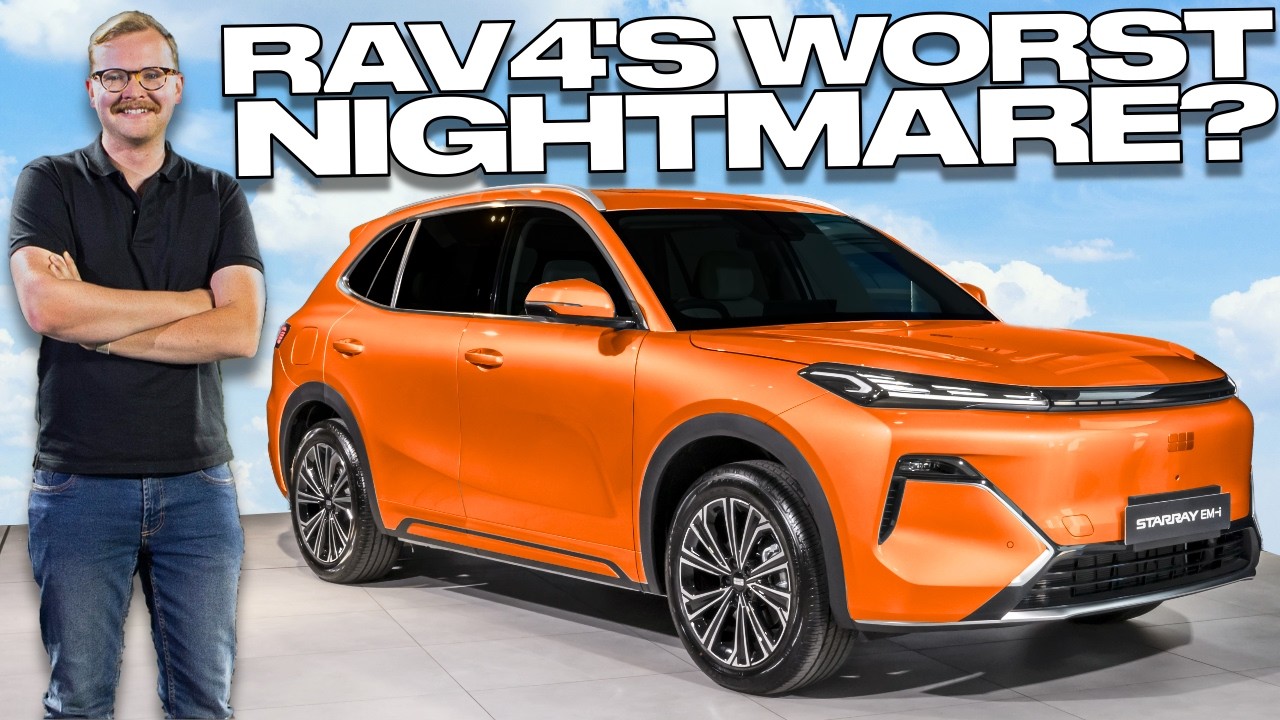
The Hybrid SUV Bargain of 2025? (Geely Starray EM-i PHEV Review Walkaround)
I’m Tom Baker. This is Chasing Cars. And you might not have heard of the SUV behind me yet, but I think the Gile Starray EMI could be one of the most consequential new vehicle launches of 2025 for two reasons. One, this is J’s first hybrid for the Australian market. This is one of the biggest manufacturers in China. They own brands like Volvo and Polestar. There’s a level of familiarity here. Now, Gileian Australia already has the very affordable EX5 fully electric midsize SUV. The Starray EMI is very similar to that vehicle, but this is a plug-in hybrid, taking a complete range out to almost 1,000 km WLTP, meaning this vehicle is going to suit more Australians at this point in time. Second point I think this vehicle is really important is I think we’re likely to be surprised again at how affordable this vehicle is. The EX5 when it was revealed got gas from the audience when Jill said it’s $40,990 before on-road costs. I would suggest the Starray EMI needs to be even cheaper than that. So, if this starts with a three, I think mainstream SUVs like the Mazda CX-5 and Toyota RAV 4 need to be worried about this vehicle. Now, in today’s video, we’re going to take a tour of the Star Ray. Now, this one’s in pre-production form. Not everything is quite right, but I do have initial Australian specifications to share with you today, and I will be able to let you know where this vehicle will fit into the SUV landscape here in Australia. Now, this is an independent video, not sponsored or paid for by Jill. I’m going to give you my honest opinion in static form of this car. But before we get started, please hit subscribe down below and the notification bell. Chasing Cars, honest reviews of your next car, brought to you by Direct. Let’s start off with the size of the Starray, which is marginally bigger than an EX5. Particularly the length, 125 ms longer, which you’ll notice when we go and check out the boot space. Width, height, and wheelbase are all a little bit bigger than the EX5. Weight’s going to be around 1,800 kilos, we think. Now, let’s go under the bonnet here. Reasonably heavy bonnet on this thing, and you don’t find a frunk, but what you do find is the core of the hybrid system. So, we’ve got a 1.5 L naturally aspirated petrol 4-cylinder engine here. Now, the outputs look really modest. 73 kW, 125 new m, but you need to think of this as not really the core element of the powertrain, but instead a generator to add additional range to the vehicle over long distances. And that’s because a little bit like a Nissan X-Trail, but not quite, this engine runs at a fixed RPM to generate electricity for the battery. and the big electric motor in the vehicle, the P3 motor, which makes 160 kW of power and 262 new meters of torque. That’s really the number that counts for the Star Ray. It should make this thing relatively nippy. And this engine is here to ensure that there is always a supply of electricity available to go to that front motor. And as a result, the Star is frontwheel drive. We don’t think this GA platform, which is shared with the EX5, is capable of all-wheel drive, but overseas G does have plug-in hybrids with dual motors for all-wheel drive, and that’s something that might get looked at for Australia in future. Now, pop this bonnet down and we’ll have a look at the design of the vehicle. Now, I think it’s actually quite handsome. Certainly inoffensive, quite goodlooking in this silver paint. This wraparound bar here at the front incorporating the daytime running lights looks really nice. You will notice there’s an abundance of silver trim on this car. It kind of hasn’t followed the black pack trends of the rest of the industry. 19-in wheels in a multis-spoke design look good. And moving down the side, again, silver trim around the daylight opening and on the roof rails. Quite a sort of soft and curvy looking side profile, but I quite like it. And here on the driver’s side for Australia is where you’ll find the charge ports because of course being a plug-in hybrid there’s a plug. Both AC and DC for the Star 6.6 kW AC 32 amp singlephase and for DC 30 kW. So you can actually charge this thing up at a fast charger uh if you want to get in the way of all of the battery EV drivers. Uh or you can plug it in at home or onto a singlephase AC outlet and charge it up in a few hours time which is quite convenient. However, because the dead battery fuel consumption once you’ve exhausted the circa 90k electric range is 5.9 L per 100 km, you could actually just drive this thing as a hybrid and never plug it in. But if you want to get the lowest running costs possible, you will interact with the charging system of the vehicle. J has positioned itself as basically the cheapest option out of the BEV manufacturers. There are some exceptions, but Jill has put itself at that just above 40 grand rate for the EX5 EV. And I expect this vehicle will be even cheaper. And that has got to be subsidized pricing or something like that to allow J to get a foothold in the market because honestly, these vehicles do not feel like the cheapest options in the market. The cabin is pretty cubrious. You can tell it’s not kind of out andout luxury. There’s a few lower-end materials about the place if you go looking, but by and large, this is a nice place to be and on a par with your Toyota and Mazda interiors in terms of perceived quality for the most part. And yet, these vehicles are a lot cheaper than something like a Mitsubishi Outlander plug-in hybrid, which is one of the major rivals for the Starray along with other Chinese cars like the BYD Cine 6. Now, what we’re sitting in here is a pre-production example of a topsp spec Starray, but just like the EX5, there’ll be a topsp spec and a base model here in Australia when they launch at the end of 2025. So, the base car, maybe we’ll see high30s, top of the range. This one, maybe we’ll see mid-40s. We’ll have to wait and see. But we already know that there are some exclusive features for the topsp spec, including heated and cooled front seats or seat because there’s a weird anomaly in the specs where both of these front seats are heated, but only the drivers is cooled. That’s something Gileia Australia is trying to fix before the launch of this car. The 16 speakeraker Flyme sound, premium stereo, and a panoramic sunroof are also exclusive to the top of the range model. But we think standard across the range will be the 10-in driver display and this high-res, very quick responding 15-in central touchscreen, which now also includes Apple CarPlay from launch. Android Auto will be added through an overtheair update in 2026. And even when you’re using CarPlay, this climate bar will stay on screen. There’s some other cool touches like the fact that this volume knob here actually doubles as a secondary function if you press it in. You can do things like fan speed and have that operate through this dial. Now, one thing I like about this Julie interior is although it’s sort of visually Chinese and kind of looks like an EV inside, it doesn’t have the finicky level of user interface that you see in so many rivals. Like the air vents, you just reach out and move them. The steering wheel actually just has manual adjustment. Is that fancy? No. But it does mean you can change it easily. Same with the mirror controls. They’re just down here where you expect them to be. So, even though it looks modern, it looks plush, it kind of works like a normal car. And I don’t think there’s anything wrong with that. That’s true of things like this glass roof. It’s an opening roof, not just a fixed piece of glass, which you don’t want in a hot country like Australia. And it has a power sun shade. You’re starting to see what I mean by the fact that these cars are likely to be priced among the cheapest in their segment, but they’re not equipped like the cheapest cars. Moving to the back seat, the first thing I wanted to show you was the door closing nicely, but I just noticed a few imp what I thought were imperfections up here in the headliner, but I actually think it’s just the pre-ely plastic that hasn’t come off yet cuz this car is so brand new. But going for that door close, you know, it it sounds solid. Now, what you’ll immediately see is that here in the back, the space on offer is enormous. So, I’m 6′ 183 cm. Head room’s good despite the fitment of the sunroof. Leg room is immense. Toe room is excellent. And this bench is inclined up enough to support my legs. Now, in the EX5EV, if you’ve watched our videos on that, you’ll know there’s a little tray that you can slide out under the chair. Uh but in the Starray, there’s a fuel tank under here. So, that tray gets deleted. That’s pretty much the only compromise in the platform because you’ll see there’s still a completely flat floor, which is really rare for a combustion vehicle. You are getting some amenities. rear air vents here. Two more USB ports to complement the two up the front. And even things like the sort of semi soft materials continue here in the back. You do notice a couple of maybe a little cost savings in the fact that the the fitment of some of the piping in the back of the seat is a bit wavy, bit dodgy. That’s kind of the first thing I’ve seen in this car where the quality doesn’t look completely bang on, but of course that’s not going to kill this thing for most people. You are getting a flip- down armrest with two cup holders as well. So, all in all, I think you’d have to say it’s pretty spacious and reasonably wellappointed back here. Some of the additional length of the starray compared to the EX5 is found here at the back. And you can also see the handsome styling continues, although it is, I guess, slightly Porsche Cayennees, though there are worse cars to look similar to than that. Now, I mentioned before this is a pre-production vehicle and one of the areas you can see that is at the back cuz it doesn’t have the correct badging. Now, we will get this J badge spelt out across the rear for Australia, but there’ll also be a Starray EMI badge down here. Power tailgate is fitted to the Starray that’s seen by Gileia as a family necessity these days. It gets up and out of your way and reveals a decently sized boot. 528 L in capacity is bigger than an EX5. Nice dual height Euro style boot floor if you want to get some extra capacity there. You will notice though there’s no spare wheel and tire. Though Jill Australia is understood to be working on making an accessory spare available for purchase, which is at least something. So far in Australia, Jill’s had a reasonably good run of success with the EX5 EV. The Star Ray EMI should be all about turbocharging this brand’s intentions here in the Australian market. Frankly, the timing couldn’t be better. The car industry locally is about to go through a big crunch imposed by emission standards laws which are now in force here in Australia and Jill’s pretty well set up to do well under that system. In fact, they’ll probably generate credits under the CO2 laws that they can sell to other manufacturers for a profit. And this vehicle will generate almost as many as the EX5. But simply put, this appears to be a hybrid that looks quite liveable. The size is friendly, the interior is roomy, it’s got decent all EV range. Its total range of over 900 km makes it easy to live with day-to-day. And if the price can be just as surprisingly low as the EX5 EV, then I suspect rivals from mainstream brands that we all know very well will have a threat on their hands in the form of the Starray EMI. Now, I do reserve my judgment on this car for when we’re able to actually drive it because we know Australian roads are tough, and this thing will need to ride and handle properly in order for us to recommend it. But the first impression seems positive. I’m looking forward to driving it when the Starray EMI launches locally in the fourth quarter of 2025. Keen to know your opinion. Please let us know down below in the comments. While you’re there, hit subscribe and the notification bell if you found this tour useful. And as always, thank you for watching Chasing Cars.
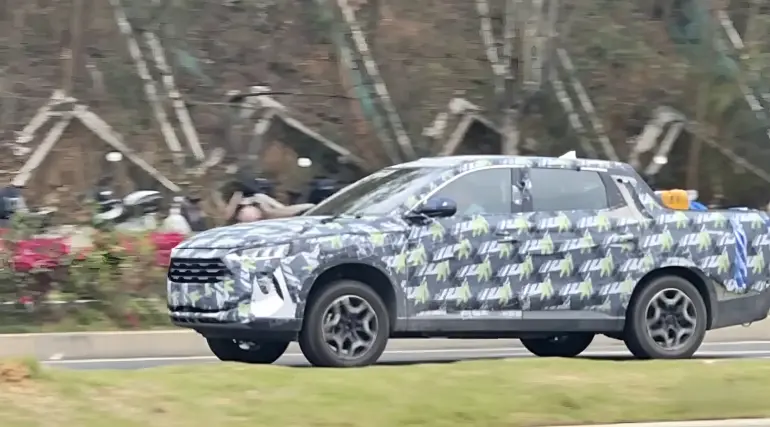
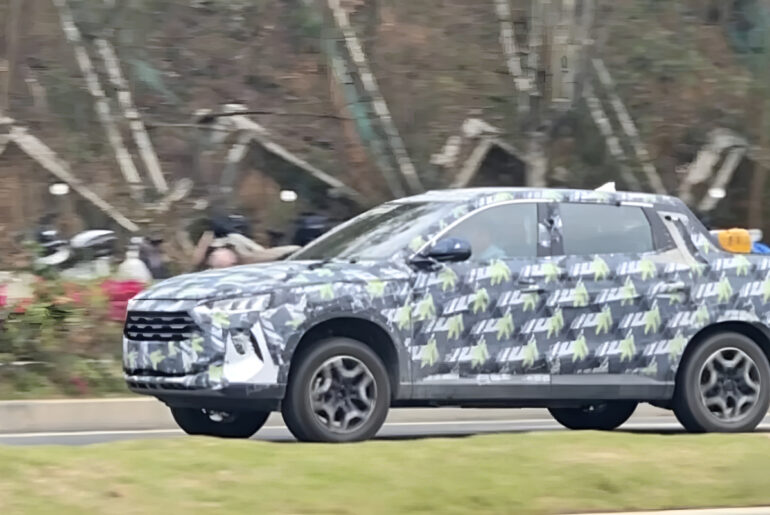
The Geely Starray (Galaxy Starship 7) is launching soon. We get a hint on pricing and take a first look at this hybrid SUV.
Chasing Cars founder Tom Baker reviews the Geely Starray EM-i plug-in hybrid SUV, which launches in Q4 2025 with a petrol engine, electric motor and LFP battery for 84km electric range and 943km combined range. Two trim grades will be available likely starting under $40,000 in Australia.
We look at specs, range, exterior, interior, technology and more in this first review of the Geely Starray EM-i (known as the Geely Galaxy Starship 7 in China).
Other hybrid SUVs to consider at this price point are the Chery Tiggo 7 Super Hybrid, Toyota RAV4, BYD Sealion 6, Mitsubishi Outlander PHEV, MG HS, and more.
Time codes:
0:00 – About this video
0:18 – What is the Geely Starray?
0:51 – Expected pricing
1:54 – Size and dimensions
2:15 – Specs and how it works
3:33 – Styling and design
4:10 – Charging
4:38 – Fuel consumption
4:55 – Interior
6:00 – Australian specs
6:33 – Technology
7:08 – Easy to use
7:58 – Back seats
9:28 – Rear end
10:00 – Boot space
10:30 – Verdict
As always, we don’t accept advertising from car manufacturers, and we’re powered by Budget Direct.
Subscribe now! https://www.youtube.com/user/ChasingCarsAustralia?sub_confirmation=1
Chasing Cars on Facebook: https://www.facebook.com/chasingcarsaustralia/
Follow Chasing Cars on Instagram: https://www.instagram.com/chasingcars.com.au/
Chasing Cars is Australia’s most independent source of new car reviews, car industry news, comparisons and car guides. We give you a critical look at every new car you should consider!