Exactly How Much Range a 10 Year Old Electric Car Loses
So, what do electric car batteries look like after 10 years? In this video, I’m going to find out what my budget electric car looks like and the condition of the battery. If you’re new here, I’m Alex. I’m a huge car fan and love living an alternative life. I’m really financially responsible, which is why I’m on a mission to show you that you can live with a budget electric car. So, I’m documenting my journey and what it’s actually like. Now, electric cars aren’t new. They’ve been around for a while now, but I’ve had this car for a couple of months now and I’ve been learning about how to maintain it, how to charge it for the most cheapest rates and to alter my mindset really on what it’s like to drive electric for the first time. Overall, it’s been great. I’ve got a safe and comfortable and practical car packed with features and something that cost me pennies to drive. Now, what I really want to know is the condition of the battery. As the car only tells you how many battery bars are left, it doesn’t give you any more information like how much it’s degraded over time, the state of the charge, and how many cells are good and how many cells are bad. We can find out a lot more information by using some clever tools and apps to dig into the battery technology and find out what it looks like after being on the road for 10 years. Let’s first understand how electric car batteries work and what different forms they come in because not all electric cars are created equally. Leaf I’ve got that I’m sat in right now was one of the first generation Nissan Leafs and was announced and released in 2010. It has a 24.15 kWh battery pack underneath with a usable capacity of about 21.3 kW hours. Now cars these days have got much bigger batteries than mine. So they can do 200 to 400 or even more miles on a single charge, but my budget doesn’t stretch that far yet. So I’ve bought this car which is 10 years old and got 80 mi range approximately. The official US EPA rating for the 2014 Nissan Leaf was 84 miles, which if you look at that figure, it means it only just lost one mile of range based on those tests that they did in the US when they first released the car in 10 years, which is really not bad at all. The NEC, which is the old way that cars were tested for range and economy, said that the car had around 124 miles of range, which is totally unrealistic to be honest as well. And most people in the industry will know that the old NEC cycle is actually not very accurate at all and always way overestimated the range and the economy of a car. So realistically, it’s only about 80 mi range according to the EV database website. So anyway, the battery in most electric cars, you’ve got a lithium based battery which is sits underneath like a skateboard platform underneath the seats and the bottom of the car. Now, what people don’t realize is that EV battery chemistry and the battery cells themselves are all different on different types of vehicles. Like I said before, the chemistry is different. The layout’s different, the number of cells that are used, the design of the cells, and also the cooling and thermal management of the cells on electric vehicles are all different, and they all make an impact on how long the battery lasts. Now, my 2015 Nissan Leaf uses a type of battery with no kind of cooling at all. No fans, no pumps, no liquid coolant running through the battery to cool it down. Nothing. Just batteries in the metal case. Looks like this. Now, compare that to something like a Tesla Model S released at a similar time. And things are totally different. It uses a really advanced liquid cooling system and always looks at monitoring the battery temperature and actively manages it, too. It will adjust the coolant based on whether you’re rapid charging it on a hot day or whether you’re stuck in traffic or whether you’re driving fast or slow. It doesn’t matter. It will always try and optimize the temperature of the batteries to keep them in the best state possible for longevity. So, every time I fast charge the car or drive around a lot on a hot day in the summer, I’m always increasing the chances of it degrading quicker. That’s why checking the battery health on this 10-year-old Leaf is so important because it’s had no active management or cooling to cool the batteries down. So, what am I expecting with my car? In 2011, Nissan claimed that these batteries on the new Leaf will have at least 10 years life and will have 80% capacity after 5 years. But the real story is with data collected from over 400,000 Leafs across the world, it’s actually much more accurate to be 20 or 22 year battery life and they’ve degraded a lot less than they initially thought. And of course, after 2022 years or whenever the battery eventually is not usable really in the car, you’ve got lots more options of what to do with it. You can recycle the battery components or you can reuse the battery as something like home storage battery solutions for running your everyday electronics. Nissan gave its users guidelines as to best manage the battery. Those guidelines included that to not drive it in hot temperatures like above 49° which is obviously very rare on the planet and also to prevent driving it from anything less than -25°. They say to also limit the state of charge between 70 and 80% when using rapid charging a lot and making sure that the battery should be below 80% before attempting to recharge the battery. Nissan say to avoid leaving the vehicle parked up for more than 14 days without any battery. It also warns that if you rapid charge often and it’s the primary way that you charge the car, then expect it to be 10% wearing out 10% quicker than it would be if you were doing it on slow or normal charging procedures. And also, this is over a 10-year period as well, which is actually surprisingly a lot less than I thought. So, my expectations are because the battery on mine has only lost one battery bar after 10 years with a good service history and an indicated range of about 83 or 84 miles, I’d say we have probably at least 80% battery capacity left, if not even more. I go as far as to say it’s got 85 or even 90% battery still, which if you compare it to my three-year-old iPhone, then the capacity on here is only at 83% after using it every single day. So, if it’s got anything above that, that’s really good. But we’ll find out later in the video. So, what hardware and software am I using? What apps and what tools am I using to measure the battery health? Well, I’m using this OBD2 dongle and an app called Leaf Spy. Once you have it connected to the car, the lease by app tells you a lot more data than you would be able to by just looking at the dashboard, but all the numbers on the screen that I’m going to show you in a bit might be a bit confusing. So, let’s explain what each number means and what we’re going to look out for when we assess the car. So, back to the studio. So, number one, you got state of house of the battery s. Then you’ve got number two, which is the state of charge, SOC percentage. And then number three, you’ve got the remaining amp hours. So the maximum capacity used to be and what it is now. Then there’s the cell pair voltages. The least white app displays different individual cell voltages and I want all of the cells to be within 20 or 30 molts of each other. So if it’s anything more than 30, it’s a little bit of a concern as it could mean that there’s an individual cell that has an issue or there’s something wrong with the balancing of the voltages and it’s a bigger problem to deal with. So the smaller number of the millolt figure, the better. Going back to number one, state of health. Obviously, at the start when it was brand new, the state of health of the battery will be 100%. And it shows you what capacity of the battery is still available. So, if mine shows 85% or more, that’s really good because it’s now 10 years old. And also, if it’s below 80%, it would have shown that my battery bars on the dashboard would be 10 or fewer. So, also, I would have seen a drop in range as well. And at the moment, I’m very confident that it’s not anything less than 80%. But again, we’ll find out in a bit. Now, number two, state of charge, is just what the condition of the battery is right now, how much it’s charged in terms of percentage. And it’s better to see this figure on the Leaf Buy app than it would be on the dashboard because the dashboard only gives you like an estimated range, an estimated battery percentage, and the Leaf Spy app will tap into the computer and give you the actual real readings of it. Now, the remaining amp hours is a bit more technical and a bit more difficult to explain, but I’ll do my best. When it was brand new, the 24 kWh battery in my car would have around 66.1 amp hours of capacity. So, we’re looking at 59 or more amp hours, and that would show an excellent battery capacity still. If it’s low 50s or mid50s, it will show a significant amount of degradation. So, hopefully we don’t see that. And below 49 means that there’s normally less than nine bars on the dashboard. So, as we’re doing my car now with 11, I don’t think it would be anything less than 50. Other things to look at is the health index. It measures the internal resistance of the batteries. And a good level for Nissan Leafs is between 60 and 80. And the higher the number is, the better. So, now we know what to look out for. Let’s look at my actual results. So, I have this dongle, which I’ll again I’ll link in the description if you’re looking to buy a Nissan Leaf or wanting to use this for an electric car to check their state of health along with Leaf Spy. Now, this is a special adapter because it has to be uh a Bluetooth with low energy, and only these kind of ones work with the Leaf Spy app and the iPhone or Android phone. So, make sure to get the right one when you’re looking to buy uh an adapter and buying the Leafs by app as well. So, the Leaf Spy app is here and I’ll connect this to the car now and read it. So, I’ve got the app up now and it’s showing me lots of different data and it shows me the tire pressures in the corner. It shows my state of charge at the moment with 71.6%. Which at the moment is different to what I’ve got on screen, which is the battery is at 70%. And there’s lots of stuff going on here. State of charge, G, DTE, and let’s go to the actual figures of the different ones. Okay, so that’s really good news. So, the state of health, which is what we talked about earlier, the first result at the top here is 81.83%. Now, 85% or above is good. Um, we’re just below that, which is interesting. HX, which is the other figure we talked about earlier, and that’s the health index. So, 60 to 80 is good, and we’re on 75%. So, that’s brilliant. The car’s done 61,000 miles and it’s had 267 quick charges and 1,228 level one, level two charges, which is quite good. Yeah, we’re doing really good so far. And if we look at other news, we’ve got 9 molts as the range between Okay, we’re on 10 now as the range between the highest and lowest uh cells. So, fantastic to see that. Finally, also the remaining amp hours. So, if we look at this, there is 53.52 amp hours. And ideally, we want kind of more than 55. So, it’s a bit less than I initially thought. Going to go down obviously over time, but I think that’s pretty good. That’s pretty good. I think the best result is the 10 molts. So, what are your thoughts? Is the battery in good condition? Let me know in the comments below and check out this video next. Thanks so much for watching. Until next time.
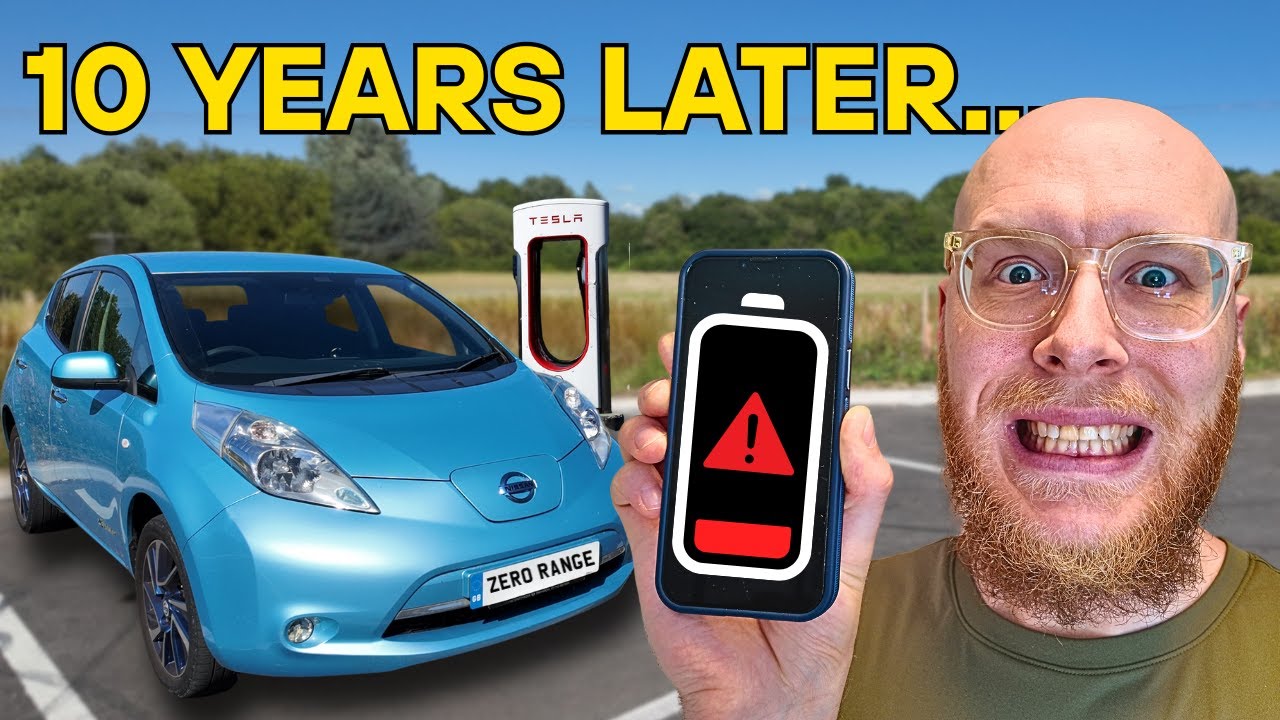
Now, after 10 years and 61,000 miles, how much battery remains, and what is its condition?
Let me know in the comments – did I buy a good car?
🍿 WATCH NEXT
Can My Old Electric Car Do 100 Miles on 1 Charge?
🔧 TOOLS I USED
OBD SCANNER: https://amzn.to/4lrvz3t
Leafspy Pro: https://apps.apple.com/gb/app/leafspy-pro/id967376861
🔗 ELECTRIC CAR MUST-HAVES
1. Type 1 to Type 2 Adapter: https://amzn.to/4nsBKW8
2. Octopus Electroverse: https://apps.apple.com/gb/app/octopus-electroverse/id1535444463
ZapMap: https://apps.apple.com/gb/app/zapmap-ev-charging-points-map/id964082746
3. ‘Industrial’ Extension Cable: https://amzn.to/43Ue6dx
4. EV Charger Holder Bracket: https://amzn.to/4lfnkXC
5. Portable Air Compressor: https://amzn.to/4lqaJ3Y
+ FREE £50 For Switching to Octopus Energy: https://share.octopus.energy/brave-eland-597
⏰ MY FAVOURITE GEAR
Camera: https://amzn.to/3T75nhU
Tripod: https://amzn.to/3FShlcm
FREE CAR HISTORY CHECK: https://motorscan.co.uk?ref_id=e4a7KXYagv&promo=referral&utm_campaign=Referral_Invite_Friends&utm_medium=Referral_Programme&utm_source=Link
FREE CASHBACK: https://www.topcashback.co.uk/ref/alexcars
🐦 MY OTHER SOCIALS
Instagram: https://www.instagram.com/alexcarsmedia/
👋 WHO AM I?
I’m Alex, a British guy sharing all of my experiences in my 30s.
I was an automotive engineer, turned digital nomad and traveller. I want to share with you the different car industries across the world, combine them with the best travel advice from real-world experience, and teach you how to live a financially responsible life.
I’m just starting out, so please do hit the SUBSCRIBE button to learn more about living with a budget electric car.
⌚️Timestamps
00:00 Intro
00:47 How EV Batteries Work
03:46 My Expectations
05:48 Battery Tools
06:14 What The Numbers Mean
06:53 Results to Aim For
08:30 Initial Results
09:36 Analysis – Good or Bad?
🎵 Music from #Uppbeat (free for Creators!):
https://share.uppbeat.io/8ryasnm0fs85
PS: Some of the links in this description are affiliate links that I get a kickback from 😜