Toyota CEO JUST Banned EVs For Life!
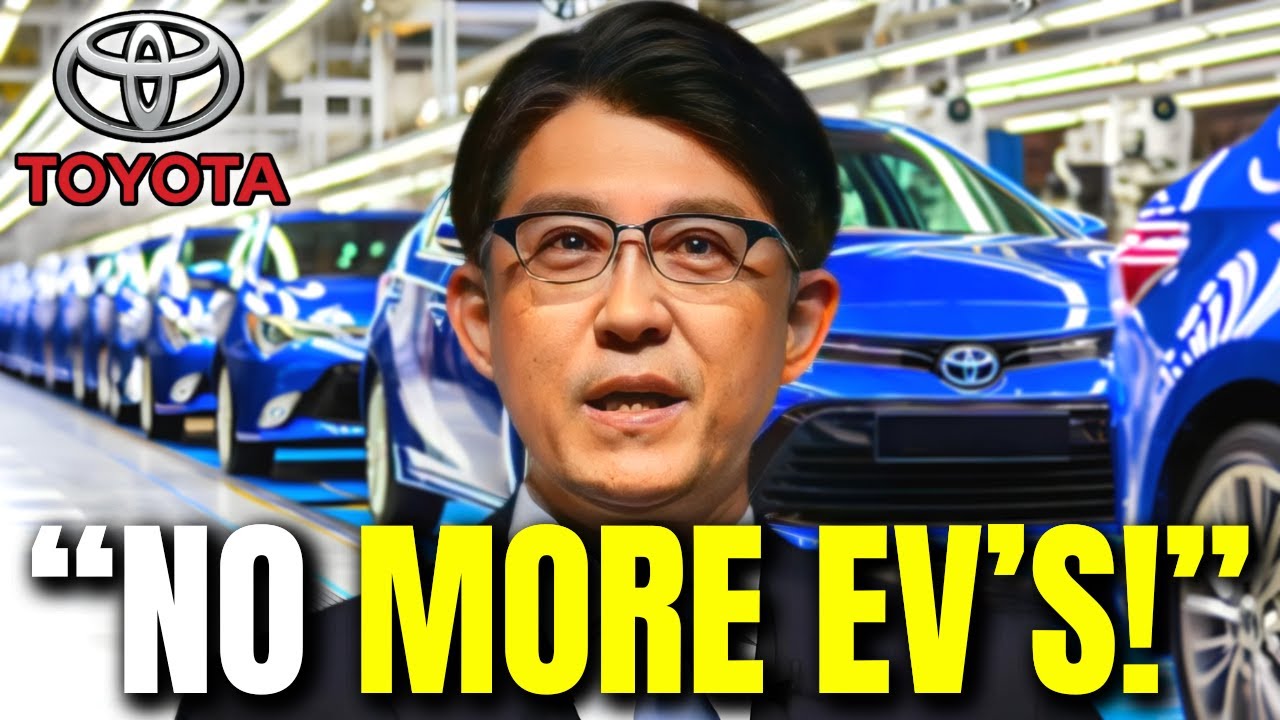
Toyota used to be ahead of its time it still does not have a pure electric vehicle on the road ultimately the customers will tell us what is the best power train at the right timing for them in a move that took the automotive World by surprise Toyota’s CEO coji Sato
Recently announced that the Japanese automaker will no longer produce electric vehicles choosing instead to focus on hybrids to provide Variety in their lineup this decision is a bold Divergence from the current trajectory of many major car companies who are ramping up their commitment to EVS as the future of Transportation as
Environmental concerns grow and Global emission standards become more stringent a clear majority of the automotive industry seems to be betting on EVS as the answer companies like Tesla with its Model S model 3 and model y have already carved a niche in the market demonstrating the viability and desirability of electric cars General
Motors Volkswagen and Ford have also committed billions of dollars into EV development and infrastructure aiming to launch numerous electric models in the coming years so why would Toyota a behemoth in the industry and an early Pioneer of hybrid technology with its iconic Prius model choose to Zig when
Everyone else is zagging the answer might lie in the company’s DNA and a broader vision for sustainable Transportation Toyota’s hybrid vehicles have always been about striking a balance they offer improved fuel efficiency and reduced emissions compared to Conventional gasoline powered vehicles while eliminating the range anxiety associated with pure
Electric cars for many consumers especially those living in areas with limited charging infrastructure hybrids represent a practical and accessible Bridge toward Greener Transportation furthermore coi’s announcement is also a reflection of Toyota’s long-held philosophy of Kaizen which emphasizes continuous Improvement and iterative Innovation while other manufacturers are pursuing the flashy Allure of the full
Electric dream Toyota is doubling down on refining and perfecting a technology it has championed for over two decades it’s also worth noting the market reality despite the buzz around EVS hybrid vehicles still hold significant market share in various regions with Toyota’s hybrids being particularly popular in places like Europe and parts
Of Asia there’s a clear indication that a segment of the car buying population is looking for alternatives to Pure electric cars and Toyota aims to serve this demographic there’s an underlying pragmatism to Toyota’s decision battery production for EVS is not without environmental concerns particularly around the mining of materials like
Lithium Cobalt and by focusing on hybrids Toyota can ensure a more sustainable rate of battery consumption potentially alleviating some of the environmental and ethical concerns tied to battery production the response to sat’s announcement has been mixed critics argue that Toyota is taking a step backward missing out on the
Inevitable electric future they point to the successes of other automakers who have embraced the EV Revolution as well as the burgeoning global charging infrastructure they believe that in time the range anxiety associated with ev’s will become a thing of the the past and Toyota will be left playing catchup
However supporters of Toyota’s decisions see wisdom in this approach they argue that automo of diversity is crucial and by offering a varied lineup Toyota ensures that there’s a vehicle suitable for everyone’s needs hybrids they argue are still a step in the right direction significantly reducing emissions compared to Conventional vehicles and
Offering a practical flexible solution for many drivers Toyota’s decision also poses an essential question to other automakers is the industry’s move to EVS happening too quickly and are there alternative perhaps more Sustainable Solutions that have been overlooked in the rush to go electric companies like Mazda which has always prized the joy of
Driving have also been slower in their adoption of pure EV technology instead of looking at innovative solutions like their skyactive X technology which seeks to improve combustion engine efficiency to new levels the automotive landscape is one of the most dynamic Industries globally driven not just by techn technological innovations but also by
Changing consumer preferences regulatory environments and Global socioeconomic factors Toyota’s announcement regarding its focus on hybrids instead of EVS is more than just a corporate strategy it’s a reflection of a larger narrative in the automotive world for years Toyota has held a reputation for thinking longterm one Might Recall how they faced
Skepticism when they first introduced the Prius hybrid to the market in the late 1990s at that time the idea of a gasoline electric hybrid seemed far fetched to many but Toyota saw the potential and persisted today the Prius is not just a car model but a symbol of hybrid Technology’s potential and
Success their decision to focus on hybrids in the face of an industry-wide EV Trend also showcases Toyota’s understanding of diverse consumer needs not every driver requires or desires a fully electric vehicle for those living in rural areas or places without comprehensive charging infrastructure a hybrid can be a more sensible choice
Plus with the constant Improv movement of hybrid technology these vehicles continue to offer better fuel efficiency and reduced emissions with each new model year however the shift towards electric is undeniable as the world grapples with climate change and a need to reduce carbon emissions EVS offer a solution that resonates with an
Increasingly econscious global population Brands like Tesla have not only made EVS popular but have transformed them into status symbols as countries like Norway Germany and even China ramp up their efforts to promote Electric Mobility the pressure on tradition automakers to adopt this technology intensifies while other giants like Honda BMW and Mercedes-Benz
Invest heavily in electric technology they too understand the value of Diversified portfolios for instance Honda’s Clarity lineup offers electric plug-in hybrid and hydrogen fuel cell option catering to various consumer needs and local market conditions the transition to sustainable Transportation isn’t a one-size fits all solution and the multitude of avenues explored by
These companies emphasizes that moreover Toyota’s Focus focus on hybrids doesn’t mean they’re completely ruling out other Technologies the company has also shown interest in hydrogen fuel cells with models like the Mirai hydrogen being a clean energy source could play a significant role in the future especially in sectors where electric
Might not be the most viable option such as heavy Trucking furthermore this Divergence by Toyota could stimulate healthy competition and innovation in the auto sector as various companies Champion different Technologies research and development in each area will likely intensify this competitive environment will only benefit consumers offering them better performing more efficient
And more affordable vehicle options in the long run Toyota’s stance as put forth by CEO coji Sato underscores a larger debate taking shape in both the automotive world and amongst Global policy makers the fundamental question being is there a single road to a sustainable future or are multiple paths
Each valid in its own right leading towards that shared destination while electrification dominates headlines and for good good reason given the advancements and Investments made in that sector it’s essential to consider the broader Global context infrastructure development varies greatly from one region to another in urban centers like San Francisco or
Amsterdam charging stations are becoming as common as traditional gas station facilitating the rapid growth of EVS but in vast expanses of developing nations or rural areas such infrastructure is scarce here hybrids offer an immediate solution allowing for decreased emissions without the constraints of limited charging fac facilities it’s
Also pertinent to consider cultural and economic differences across regions for many Emerging Markets the immediate priority might be affordable mobility and not necessarily a fully electric one Toyota with its Global footprint is acutely aware of these diverse market dynamics their decision to prioritize hybrids can be seen as a nod to these
Varying needs ensuring they offer vehicles that cater to a broader range of consumers however Toyota’s focus on hybrids is not without its challenges the market is rapid ly evolving and consumer perception is a powerful driver of change as younger Generations who have grown up in an era of heightened
Environmental awareness come of age their preference for zero emission Vehicles could become a dominant Force companies like Nissan with the leaf or Tesla with its expanding lineup resonate with this demographic positioning themselves as not just car manufacturers but as forward-thinking environmentally conscious Brands ultimately the path to a sustainable Automotive future is a
Complex one shaped by Myriad factors ranging from technological advancements to Consumer preferences and from market dynamics to governmental policies while electric vehicles are undoubtedly a crucial part of this journey Toyota’s decision to focus on hybrids underscores the significance of a diversified approach as the world continues its March towards a cleaner Greener future
It will be the collective efforts of various stakeholders each contributing in their own unique way that will shape the road ahead thank you for sticking with me all the way to the end please like comment and subscribe and make sure the notification Bell is turned on so you don’t miss a video
Discover Toyota’s interesting pivot in the quickly changing automotive world! In this video, we delve into Toyota CEO Koji Sato’s recent pronouncement that hybrids will be prioritised above electric vehicles (EVs). While Tesla, Nissan, and Volkswagen compete to electrify their portfolios, Toyota forges its own route by relying on hybrid technology.
Toyota, a pioneer in the business with its legendary Prius model, has always been a game changer. However, as the electric wave sweeps throughout the country, with cars like Tesla’s Model 3 and Nissan’s Leaf leading the way, Toyota’s decision raises eyebrows and generates controversy. Join us as we investigate the causes that led to this strategic decision, including global infrastructure, market dynamics, and even the effect of government legislation.
Amid a rush of EV enthusiasm spearheaded by industry titans such as General Motors, BMW, and Ford, Toyota’s decision to maintain its hybrid focus demonstrates a broader perspective. How does this strategy align with or contradict customer expectations? What impact do government incentives for electric vehicles have on the market? Where do other possibilities, such as hydrogen fuel cells, fit into this picture?
This video promises a complete look at Toyota’s strategy in comparison to its competitors’ aggressive electrified ambitions. It’s more than simply a business story; it’s a reflection of transportation’s future, environmental sustainability, and the ever-changing tides of customer tastes. Don’t miss out on this in-depth look at vehicles, competition, and innovation!
Subscribe now to learn more about the automobile industry’s titans and their fight for a sustainable future.