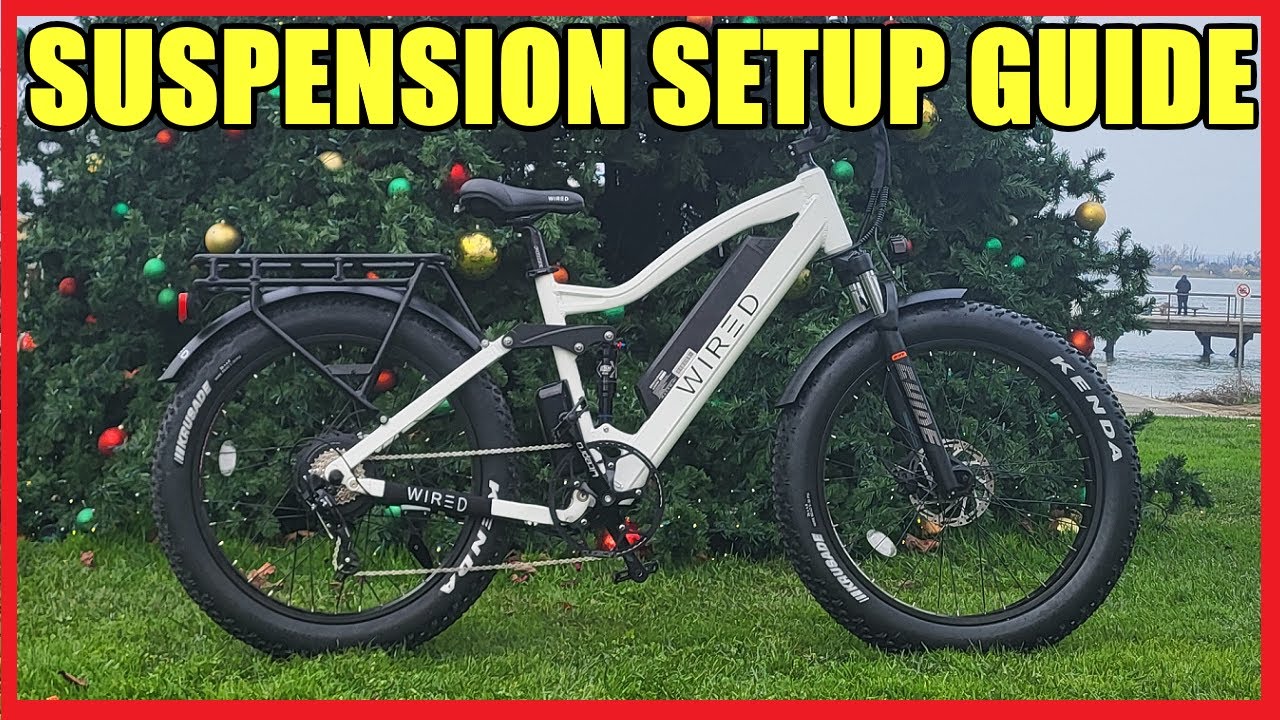
How To Setup Suspension On A 2024 Wired Freedom
Hey what’s up chithe heads welcome back to the channel you know today is the day after Christmas and perhaps you’re one of the lucky few who found yourself the new owner of a wired Freedom or perhaps you’re somebody like me who decided not to buy Christmas presents for anyone
Else and instead buy yourself a new wired Freedom either way you’re in luck because today’s video is going to be for you I’m going to be sharing some of my 37 years of experience with setting up full suspension on electric bicycles but before we get started go ahead and leave
This video a like And subscribe to the channel if you haven’t already without further ad guys let’s get right into it all right guys now that we’re all up close and personal this video is going to be more of a suspension crash course and I’m going to explain to you this the
General reasons why you set up the suspension this way and why the specifications that come with the bike are just general guidelines and why they don’t work for every bike okay so there’s a couple things you want to keep in mind here this shock is a 190 mm eye
To eye length and what that means is from here to here from this Bolt to this bolt this shock has a total length of 190 mm yeah I know I spared no expense on my tools here this shock has 50 mm of travel and the travel is the bottom
Portion of the shock and that’s the portion that’s actually being used when you’re using the suspension so 50 mm of travel is just shy of 2 in this bike has more than 50 mm of travel in the rear and that’s because this bike has a lever here so when you’re using a your
Suspension you’re using a total of 50 mm here but at the end here you can tell that’s going to move more than 50 mm and that’s why if you look at the settings that come with the bike and the recommended pressure settings from the shock it’s not going to work well
Because I’ll actually use an example here so my Turbo Leo this shock has a more direct path from the rear triangle where it’s going to be pushing on the shock but it’s not going to be putting as much leverage as the wired Freedom well so the pressure settings for this
Shock would be different than it would for the freedom but the thing is these shocks are sold for a variety of different bikes they’re not sold for specific bike models and manufacturers so this same shock will fit in a different bike frame so the settings would have to be adjusted depending on
The geometry of that frame so according to the guide here this stops at a B body weight of 220 lbs but if you use the math and followed up this recommends for a body bike rider weight of around 245 lbs such as myself I should be around
180 PSI in the rear shock I put the shock to 180 PSI and it bottoms out on almost everything I rote off a a curb and it bottomed out immediately and if you’ve done the same thing perhaps you’ve had the same experience so what we have to do here there’s a different
Way to set this up and this is the way a lot of these shock manufacturers recommend you set them up and I’m going to go ahead and say it here DNM um this setup guide is pretty whack this is uh for a variety of different shocks
They make yeah this isn’t very good the funny part is it says for more information go to their website go to their website and look up this shock and what does it give you that’s right a digital form of this exact same setup guide so I’m going to show you how to
Set up this shock and for the first part of this setup I’m gonna do this inside and the rest of it we’re GNA do it outside the first thing is we’re gonna set up what they call sag manufacturer recommends a sag of 15% or 25% depending
On what type of ride you want 15% is a more firm ride 25% is a more plush ride or soft ride and what sag is is this shock has a total of 50 mm of travel right the SAG of 15% would be 15% of that 50 mm which works out to be guys
Pay attention cuz there’s going to be a test at the end 15 % sag is 7 1 12 millim of travel this shock has a max maximum pressure of 250 psi so keep in mind you don’t want to go over 250 all right guys for this portion you’re going
To need a air pump and not just any air pump will work you’re going to need a high pressure air pump because most pumps that are designed to pump up tires and stuff will not work at the pressures that the shock needs I got this one on
Amazon a couple years ago I think it was like 20 bucks you want to put this o-ring all the way to the top position and then you want to also do this in the full gear that you typically ride with so if you’re one of those dorks I mean
One of those people who put a bunch of saddle bags and all your accessories have all that stuff on the bike as well and have your backpack on have everything you normally ride with the purposes of this video I’m going to be doing it without and ideally it’s nice
To have a friend when you do this but unfortunately I don’t have friends so you want to do you want to sit onto the suspension of the bike don’t don’t rock it around at all and this is where it’s nice to have a friend because a friend can hold up the
Bike while you do this lean it up against the wall and that’s it get off the bike be as gentle as possible and then what we do we’re going to go to the O-ring and then measure how much did it move we moved around 15 mm
So what I’m going to do is I’m going to increase the pressure in the shock and then repeat the process until I get to a sag between 12.5 mm and 7 1/2 mm and let me show you guys for reference what I was telling you earlier
Why the guide for this shock is not accurate because as of right now I have 200 PSI in the shock and it’s still getting a sag of around 15 mm hey what’s up guys editing Tim here I wanted to bring you a message that as of now I haven’t
Mentioned in the video and that is the goal of uh setting up your suspension is you want to utilize all the travel that your shock or Fork has available without bottoming out so unfortunately with a smaller suspension setup or a shorter travel like this Freedom has you’re
Going to have to utilize higher spring rates or higher pressure in to keep the shock from bottoming out on the end of the suspension if you have a long suspension bike or a long suspension Fork what happens is you can go further into the suspension without bottoming
Out creating a softer ride but in this bike you’re going to have to run higher pressures than usual because you don’t have as much travel to just absorb all that in there but fear not guys that doesn’t mean you’re going to have a bad ride still much softer than riding a
Hard tail bike or a solid Fork but I just wanted to let you guys know that the whole goal of setting up your suspension is you want to utilize 100% of your shocks travel and so it’s going to be the most efficient and softest ride available and give you
The whole range that shock has to offer but uh I forgot to mention that back to this action-packed video I’m going to go up to 220 guys we reset the O-ring here gentle gentle does it guys lean onto the bike and then we’re going to see what
Our sag is at now I’m about 12 and 1/2 so repeat this process until you get the SAG that you want and then I’m going to show you how to set up the rebound and um compression settings outside we are now outside and this is
Where we’ll be doing the uh the rest of the suspension adjustment at now for the rest of this we’re going to be using these two knobs here this is compression I always ride with this compression open as you can see here the shock moves freely and you can get a lot of travel
In the rear going to put this compression in the middle setting and it’ll still move but it moves less so it’s going to make it stiffer the more open it is the softer it’s going to be the more closed it is and on the final setting lockout setting a lot of the
Times they not really lock out you can see the rear is not moving very much on a bike specifically a non- ebike a lot of times they like to lock out the rear to give give you more climbing power but on an ebike with electric motors and the
Assistance you don’t really need to lock out the rear very much unless you just like riding it like that so I always ride in the open position so that’s that knob the next one we’re going to be dealing with is the rebound here and that’s this little red knob the slower
The rebound is the more it’s going to slow down the shock from rebounding so let me demonstrate that I have the rebound all the way to the slowest position and look at this you see the rear it just it’s just going to go down and it’s barely coming back
Up conversely if you go the fast as possible on the rebound what that does is it’s going to make it pop up real fast in the rear so it’s going to make it much more responsive so depending on what your spring pressure AKA your air pressure is set up on this shock that’s
What you’re going to adjust your rebound to so I’m going to show you how to dictate that and you’re going to need to find a balance where you’re not going to be getting the rebound so fast where it’s bucking you when you come off a
Bump and it’s going to push the rear up too fast and you’re going to want it slow enough where it reacts to the bump but it still comes back up in time for the next bump so there’s a balance there let me show you how I typically figure
That out I’m going to roll off this curb I’m not going to jump it or anything I’m just going to roll right off and my ideal goal is to have it where the bike comes down off the curb it hits the bump and then it comes back up and that’s it
You don’t want the bike to come down and sag and come up real slow and you don’t want it to come back and then bounce all around so I’m going to show you with each extreme of the shock what it looks like coming off this curb here right now
The rebound is going to be on the fastest setting going to roll off this curb at a decent speed and watch what the rear does you see it bounces me back up so if you have it too fast it’s going to Buck you when you go off bumps so now I have
It all the way into the slowest setting and then watch what the rear does when I come off this here okay I hope I explain that good enough I’m not the biggest word Smith out there but what it is basically if you have your shock set with the rebound
Too slow what’s going to happen is it’ll be a softer ride but as you hit a bump the shock’s going to go in and it’s not going to rebound fast enough in time if you hit another bump so it’s going to just keep getting hit up and up and up
So it’s not going to give you enough support and it’s not going to react as much to the bumps that way conversely if you have it too fast it’s gonna push down it’s gonna it’s gonna rebound too fast and what’ll happen is if you’re going over bumps it’s the rear of the
Bike’s going to want to push up and it’ll Buck you off your seat so what you’re going to do is you’re going to find a happy median in there where it pushes down it reacts to the bump and it gets back up in time for your next bump
But it’s not to the point where it’s going to be too fast to Buck you up and it’s not going to be too slow to not be able to react to the next bump and line try and find it where you you come off the bump the bike goes down and it comes
Back up and it stays steady just like this so guys there you have it that’s how you’re going to set up the rear shock and it’s much more complicated than setting up the front shock on this bike or the front fork I’m going to go
Ahead and show you how to do that now but just keep in mind that there’s no right or wrong way to do this you know I’ve been doing this for 48 years now and uh you know it’s subjective some people like their shocks and forks to react different ways than other people
So just keep that in mind so don’t watch a video where someone tells you this is the right way to do it you know to your bike you can set it up as any way you want now the front fork on this bike is significantly easier to set up now the
Preload here basically is kind of like going to set up how much tension is on the fork here so basically you’re going to want more preload the heavier the rer you are the more preload you want it’s going to be more resistance so I have the same pretty much maxed out because
This is a 70 mm travel Fork there’s not much travel in there I’m going to get as much resistance as possible since I ride like a maniac and uh I’m a 245 lb Rider so you’re going to want to mess with this preload here I’ll give you try and
Give you a demonstration of what I’m talking about I have the preload all the way in the heaviest which was all the way clockwise and you see when you push it in you’re going to get a nice bit of support to it here and you’re going to
Open this all the way up preload all the way in the other direction and it’s going to give you significantly less softer ride the preload I like to run these pretty high it’s going to give you more support and then on the other side here you have your compression so the
Compression is the same thing as this one here where it’s going to dictate how hard of a s how hard or how soft your ride’s going to be have this in lock out here I’m pressing here you see that’s a really good lock out like this is a
Solid Fork at this point and you open it all the way up that’s going to give you full use of your travel there and if you want to stiffen it up more you can put that somewhere in the middle but like I said before I always use this all the
Way in the open position if you find that you’re bottoming out more than you like and you have the preload all the way up you can you can uh tighten that up as well you don’t really have a rebound adjustment on this bike so you’re not going to be able to fine-tune
The front fork as much as the rear more expensive front forks also have rebound on them so with this one you just have the preload and the compression here so yeah not too much to do on the front fork it’s a pretty easy setup so anyways
Guys I hope that uh guide kind of helped you just get started on this bike like remember like I said I’ve been doing this for 73 years there’s no right or wrong answer when it comes to the suspension setup but this is just going to give you the general guidelines on
How to get started you know I know a lot of you guys probably have questions for me like such as how did you get a white freedom and things like that and fear not I will will have uh those answers for you in an upcoming video when I ride
This some more and give you a in-depth review of this bike but as of now I’ve only ridden this thing about 15 miles I wanted to share with you guys some of my general suspension knowledge and help you get started I did Ride This Out of
The Box and I was like man this thing the suspension is just bottoming out constantly I hope you like that video stay tuned I will have a full in-depth review of this bike coming up uh as of now I am experiencing a weird issue where this bike constantly pulls to the
Left so uh I’m going to have to work with wired to see what exactly is going on I can’t figure it out yet I’m guessing that possibly the front fork was bent during shipping so I’m going to be troubleshooting some things I hope this guide helps you get started with
Riding around your freedom and uh getting your suspension tuned in a little bit so anyways guys don’t forget to like comment share subscribe and uh I will see you in the next video which will be H you know maybe tomorrow maybe a week maybe a month N
This video outlines how to setup the suspension on your 2024 Wired Freedom E-Bike.
Affiliate links if you want to purchase a Wired E-Bike!
Freedom = https://wiredebikes.com/products/wired-freedom?sca_ref=4826142.8ScZQpAjFS&sca_source=Youtube
Cruiser = https://wiredebikes.com/products/wired-cruiser?sca_ref=4826142.8ScZQpAjFS&sca_source=Youtube